

Close Menu
Cryptoz7
    What's Hot

    Scroll Proposal Would Shift Layer 2 Network Toward Privacy-Focused AI | TokenPost

    November 5, 2026

    Hijacked npm Packages Use Ethereum Blockchain to Conceal Malware Infrastructure

    November 5, 2026

    Copilot AI Predicts an Explosive 2027 for Hyperliquid (HYPE)

    November 5, 2026
    Facebook X (Twitter) Instagram
    Trending
    • Scroll Proposal Would Shift Layer 2 Network Toward Privacy-Focused AI | TokenPost
    • Hijacked npm Packages Use Ethereum Blockchain to Conceal Malware Infrastructure
    • Copilot AI Predicts an Explosive 2027 for Hyperliquid (HYPE)
    • DeFi Technologies Announces Shareholder Call to Discuss Q3 2026 Financial Results
    • BTC Eyes $80,000 as Election Risk Fades
    • After $6.3 Billion Binance Breach, CEO Richard Teng Details Recovery as Custody Moves to Center of Crypto Trade
    • Capital Markets Alliance Sues CFTC Over Approval of Single
    • Mercado Bitcoin Says Clients Suffered No Losses After Security Breach, Pauses Transfers
    Facebook X (Twitter) Instagram
    Cryptoz7
    • Home
    • Altcoins
    • Bitcoin
    • DeFi & Web3
    • Ethereum
    • Guides
    • Latest News
    • Markets
    • Regulations
    Cryptoz7
    Home»Ethereum»Hijacked npm Packages Use Ethereum Blockchain to Conceal Malware Infrastructure
    Hijacked npm Packages Use Ethereum Blockchain to Conceal Malware Infrastructure
    Ethereum

    Hijacked npm Packages Use Ethereum Blockchain to Conceal Malware Infrastructure

    cryptoz7By cryptoz7November 5, 2026No Comments3 Mins Read
    Share
    Facebook Twitter LinkedIn Pinterest Email

    Overview

    OX Security researchers identified malicious releases of legitimate npm packages compromised in a campaign linked to the PolinRider malware family.

    The injected code uses the Ethereum blockchain as a dead drop for command-and-control (C2) infrastructure. When an affected package is imported, a hidden loader queries public Ethereum RPC endpoints to retrieve a C2 IP address encoded in a blockchain transaction. It then downloads an XOR-obfuscated JavaScript payload over HTTP and executes it.

    This technique allows attackers to change the infrastructure used to deliver malicious code without modifying the compromised npm packages themselves. By updating the blockchain-based reference, attackers can redirect affected installations to new infrastructure while leaving the published package code unchanged.

    The campaign uses two obfuscation techniques to conceal the loader: Base64-encoded JavaScript and a character-permutation bootstrap. Researchers also identified execution through an interactive Node.js process, allowing malicious code to run in memory and potentially complicating detection.

    1. Check for affected versions. Review installed dependencies and lockfiles for the compromised package versions listed below. Installation alone does not necessarily mean the malicious payload executed.
    2. Investigate potential wallet compromise. If an affected package was loaded and the malicious code executed, treat cryptocurrency wallets and associated credentials accessible from that environment as potentially compromised.
    3. Restrict dependency updates. Pin dependencies to verified clean versions and consider implementing a minimum package-age policy to reduce exposure to newly published malicious releases.

    Impact

    • The affected packages collectively account for approximately 1,400 weekly downloads. This figure reflects package download activity, not confirmed infections or executions of the malicious payload.

    Threat Analysis

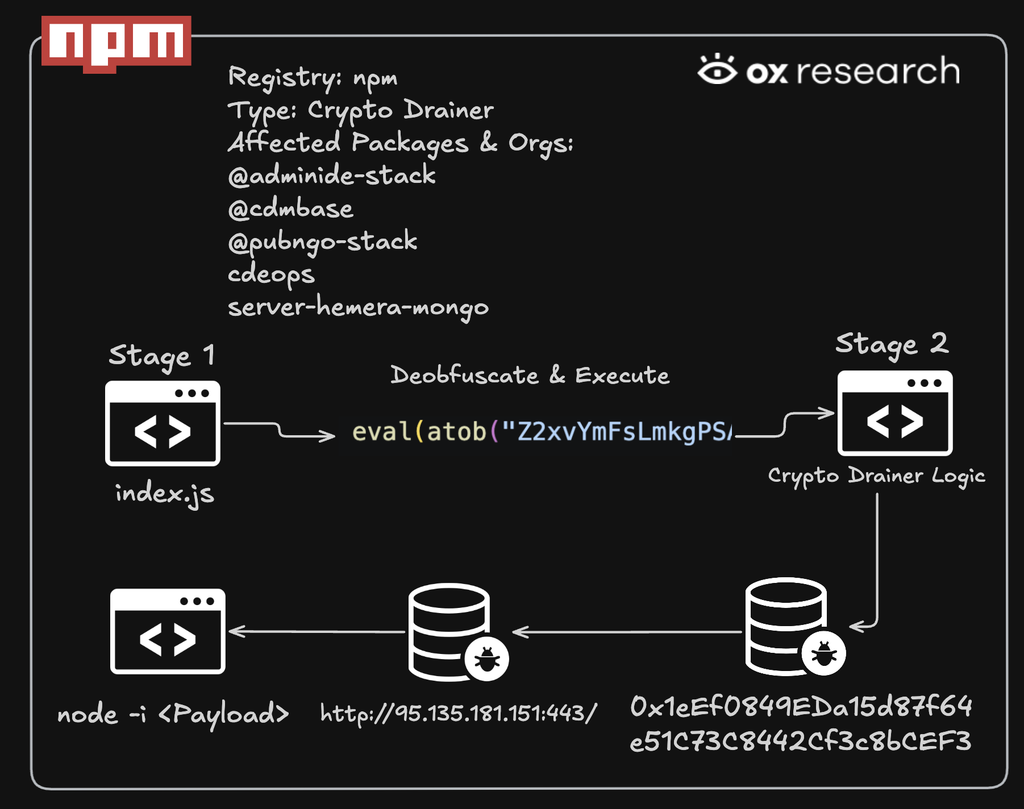
    We identified a multi-stage attack in which malicious code embedded in npm packages uses obfuscation, Ethereum-based command-and-control infrastructure, and in-memory execution to deliver additional payloads.

    The following diagram illustrates the attack chain, from the initial malicious code in index.js to the retrieval and execution of a remote payload.
    image

    Inside the index.js file, researchers identified a hidden eval(atob(…)) function that decodes and executes a malicious Base64-encoded payload.

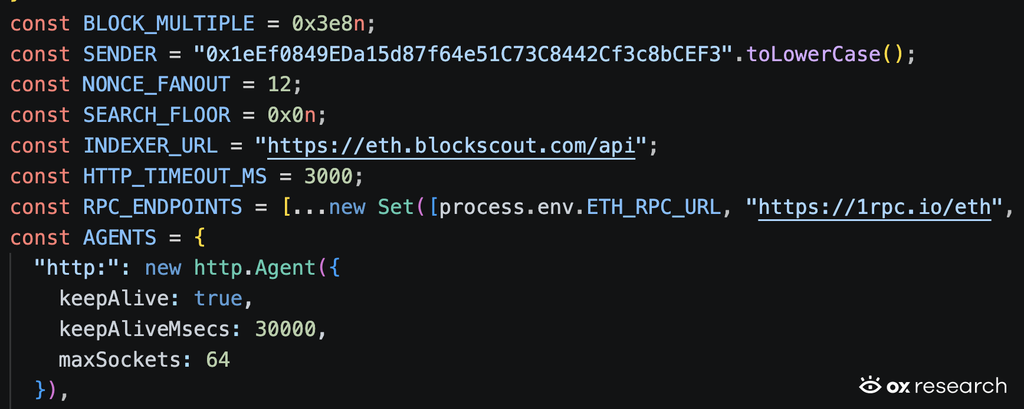
    After decoding it, we can see the crypto stealer logic, with the threat actor’s ETH crypto address inside: 0x1eef0849eda15d87f64e51c73c8442cf3c8bcef3
    image

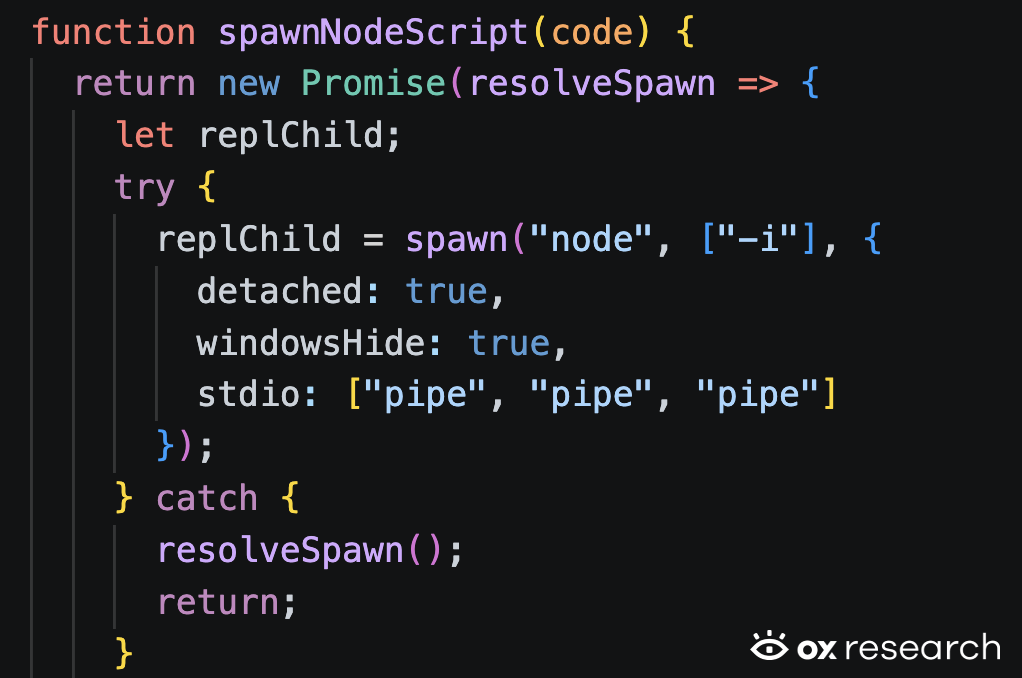
    It uses the “node -i” command to run everything inside the memory, indicating fileless execution which avoids detection.
    image

    The malware builds and resolves multiple IP addresses which are used as a C2 server.

    image

    We found the following IP addresses being used by the malware –  103[.]179[.]143[.]219, 166[.]88[.]134[.]75, 23[.]27[.]13[.]72, 95[.]135[.]181[.]151

    After downloading the remote payload from the server, the malware executes it using the same node -i command described above.

    Affected Packages

    Conclusion

    PolinRider’s return comes just a week after the reported Binance hack, underscoring the relentless targeting of cryptocurrency and software supply chains. Even major cryptocurrency thefts have not brought an end to these campaigns.

    With approximately 1,400 combined weekly downloads across the affected packages, this campaign highlights the continued risks of npm account hijacking.

    Attackers don’t need to create malicious packages from scratch when they can hijack legitimate ones. Despite years of efforts to secure npm accounts and packages, the registry remains a valuable target for threat actors.

    • 103[.]179[.]143[.]219
    • 166[.]88[.]134[.]75
    • 23[.]27[.]13[.]72
    • 95[.]135[.]181[.]151
    Blockchain Conceal Ethereum Hijacked Packages
    Share. Facebook Twitter Pinterest LinkedIn Tumblr Email
    cryptoz7
    • Website

    Related Posts

    Scroll Proposal Would Shift Layer 2 Network Toward Privacy-Focused AI | TokenPost

    November 5, 2026

    Bitcoin, Ethereum And XRP Price Prediction Today As Trump Loses Congress

    November 4, 2026

    Futures Trading on Telegram’s TON Blockchain Jumped Tenfold in a Week. Can It Take Traders From Hyperliquid?

    November 3, 2026

    BitMine Reports 6.06M ETH Holdings, With More Than 5.22M Staked

    November 3, 2026
    Add A Comment
    Leave A Reply Cancel Reply

    Top Posts

    Scroll Proposal Would Shift Layer 2 Network Toward Privacy-Focused AI | TokenPost

    November 5, 2026

    Hijacked npm Packages Use Ethereum Blockchain to Conceal Malware Infrastructure

    November 5, 2026

    Copilot AI Predicts an Explosive 2027 for Hyperliquid (HYPE)

    November 5, 2026

    Subscribe to Updates

    Get the latest sports news from SportsSite about soccer, football and tennis.

    Our mission is to deliver timely, accurate, and easy-to-understand coverage of the fast-moving digital asset industry. Whether you're a beginner exploring cryptocurrency for the first time or an experienced investor following market trends, Cryptoz7.com provides valuable information to help you stay informed.

    Facebook X (Twitter) Instagram Pinterest YouTube
    Top Insights

    Scroll Proposal Would Shift Layer 2 Network Toward Privacy-Focused AI | TokenPost

    November 5, 2026

    Hijacked npm Packages Use Ethereum Blockchain to Conceal Malware Infrastructure

    November 5, 2026

    Copilot AI Predicts an Explosive 2027 for Hyperliquid (HYPE)

    November 5, 2026
    Get Informed

    Subscribe to Updates

    Get the latest creative news from FooBar about art, design and business.

    Facebook X (Twitter) Instagram Pinterest
    • About Us
    • Get In Touch
    • Disclaimer
    • Privacy Policy
    • Terms and Conditions
    © 2026 Cryptoz7. All Rights Reserved.

    Type above and press Enter to search. Press Esc to cancel.