


The decline was attributed to weaker institutional inflows, geopolitical uncertainty and a resurgence in risk-off conditions.
Why Is Crypto Down Again?
Bitcoin Sell-Off Explained: What Triggered the Latest Market Drop
The selling continued as geopolitical tensions, weaker technology stocks and uncertainty over Federal Reserve policy ignited a broad risk-off move across markets. Over $500 million in leveraged positions in crypto were wiped out in the sell-off, adding to the downward pressure.
On Bitcoin side, the mass withdrawals from ETFs and the Strategy selling 1,638 BTC▲$62,630.00 negatively influenced short-term demand. In addition, broader macroeconomic factors are also influencing the price, which may explain why is Bitcoin dropping today.
Are Investors Selling Because of Fear or Changing Market Fundamentals?
The market volatility was made worse by fundamentals; by early July, Citi estimated that there had been almost $3.3 billion of net outflows of capital from US spot Bitcoin ETFs in 2026, eliminating one of the market’s key
Other studies suggest both on-chain activity and general capital flows are important in influencing Bitcoin pricing, indicating that the decline was not just sentiment-driven.
| Market Factor | Impact on Bitcoin |
| Spot Bitcoin ETF outflows | Reduced institutional demand and weaker buying pressure |
| Federal Reserve policy | Higher interest rates limit demand for risk assets |
| Geopolitical tensions | Increase risk-off sentiment across financial markets |
| Leveraged liquidations | Accelerate short-term price declines during sell-offs |
| Whale transactions | Can amplify volatility, especially in low-liquidity conditions |
| Institutional demand | Sustained inflows generally support long-term price recovery |
| Market sentiment | Fear often increases selling pressure, while improving confidence attracts buyers |
| Liquidity conditions | Stronger liquidity typically supports Bitcoin and broader crypto market recoveries |
How ETF Flows, Whales, and Institutional Demand Affect Bitcoin Price
ETFs historically provided among the strongest signals of Bitcoin demand: Citi estimated that ETF flows accounted for 45% of the weekly price movements. The ETFs returned to net inflows in July, but the improvement was marginal.
Although concentration of large holders may cause short-term volatility spikes, studies show that the long-term Bitcoin price movements are determined more by increases or decreases in demand. This could explain why is Bitcoin down again.
Is This a Normal Correction or the Start of Another Crypto Bear Market?
Bitcoin has lost about half its value since the peak in October 2025, and the decline seems more severe than is typical. However, it is not yet clear whether a prolonged bear market is underway.
Going forward, potential ETF influx, liquidity, and institutional adoption will dictate how the market moves. While the evidence for weakness is now strong, it is not yet conclusive that a world crypto winter has opened.
When Will Bitcoin Price Go Back Up?
Bitcoin’s ability to recover may depend on institutional demand, macroeconomic performance, and ETF flows turning positive again. After a difficult first half of 2026, analysts remain cautious, noting that past price rebounds have not seen continuous capital inflows.
Bitcoin Recovery Timeline: Weeks, Months, or a New Bull Cycle?
No signs of Bitcoin recovery have appeared either, unlike recent increases in net ETF inflows during brief windows. Analysts say that such short-term swings in price are not evidence of a trend reversal overall.
Research also shows that Bitcoin predictions over monthly time frames are very uncertain, meaning that any Bitcoin recovery timeline should be considered speculation rather than something factual.
Everything is going exactly as I told you.$BTC has bottomed.
The bear market is over.
We’re entering the most parabolic phase of the bull cycle.
This is the phase where you wake up $50K+ richer every day, for weeks.
For the record, I was the only one publicly calling the… pic.twitter.com/QgMDrrieCo
— Crypto Fergani (@cryptofergani) August 4, 2026
What Needs to Happen Before Bitcoin Starts Rising Again
For a turnaround to be more sustained, further ETF inflows and better liquidity are needed, as well as signs that broad investor interest is returning. Bitcoin surged past $66,000 in July as institutional demand appeared to be returning, yet flows were poor in H1 2026.
Macroeconomic factors may also play a role, so lower interest rate expectations, higher risk appetites in markets, or more clarity around cryptocurrency regulation may also play a role in when will crypto go back up.
Can Bitcoin Recover to Its Previous All-Time High?
Bitcoin’s previous bear markets have been followed by new all-time highs, but that won’t necessarily happen again. Citi analysts lowered their 12-month BTC target as ETF outflows continue and institutional adoption is slower than expected.
Bitcoin reaching those levels again has been attributed to market demand rather than historical price movement; analysts believe that sustained inflows into Bitcoin ETFs and institutional adoption would be needed for a full recovery.
Historical Bitcoin Recoveries After Major Crashes
Bitcoin previously recovered from the 2018 bear market and the 2022 collapse of the cryptocurrency market several months later, rising to all-time highs as liquidity improved and institutional adoption grew. Each of these events occurred against a different macroeconomic environment and regulatory backdrop.
For that reason, historical data can provide context for a crypto recovery timeline, but it cannot accurately predict when will Bitcoin rally again or the timing of the next Bitcoin bull run.
Is the Bitcoin Bottom Already In?
Several trader indicators suggest a bottoming Bitcoin phase, although analysts conclude that no metric can definitively mark the price bottom. Accumulation appears to be improving according to on-chain metrics, although institutional demand remains weak with continuing ETF outflows.
Key Indicators That Bitcoin May Have Reached a Bottom
Glassnode noted that long-term holders have returned to accumulation of Bitcoin supply, even though market sentiment is still weak and there are several wallet cohorts still in accumulation, similar to late cycle bear markets.
Even so, analysts have cautioned that the signals are not enough to mark a Bitcoin recovery, as ETF flows and trading volumes remain negative, suggesting institutional demand has not returned.
WARNING: 🚨 The worst quarter for Bitcoin EVER may be coming.
During Q4 of a midterm year, EXTREMELY bad events tend to happen.
Will $BTC history repeat? pic.twitter.com/4bCtfEdGHi
— Crypto Rover (@cryptorover) August 4, 2026
Why Extreme Fear and Capitulation Often Appear Before Reversals
Periods of extreme fear, such as excessive selling pressure, forced liquidations, and capitulation, shift Bitcoin from short-term to long-term holders but do not necessarily translate into short-term price bounces.
Onchain metrics, meanwhile, suggest long-term holder loss realization is at its highest level since late 2022, and while a sign that capitulation is underway, analysts see the activity as part of the bottoming process, not the full bottom.
Bitcoin 200-Week Moving Average and Long-Term Support Levels
The 200-week moving average has remained, for quite some time, one of the most watched and relevant Bitcoin long-term support lines. In bear market conditions, BTC has historically bottomed near this moving average, before recovering more slowly over the next months.
While prices are currently close to the 200-week moving average, which could keep this zone of interest from Bitcoin cycle explained narrative in play, analysts caution that past behavior cannot be used as an indicator.
On-Chain Signals That Traders Watch for Accumulation
Professional investors continue to monitor realized price, accumulation by long-term holders, and exchange balances for signs of improving demand. According to recent Glassnode data, experienced holders have even been increasing their exposure to the asset despite negative ETF flows.
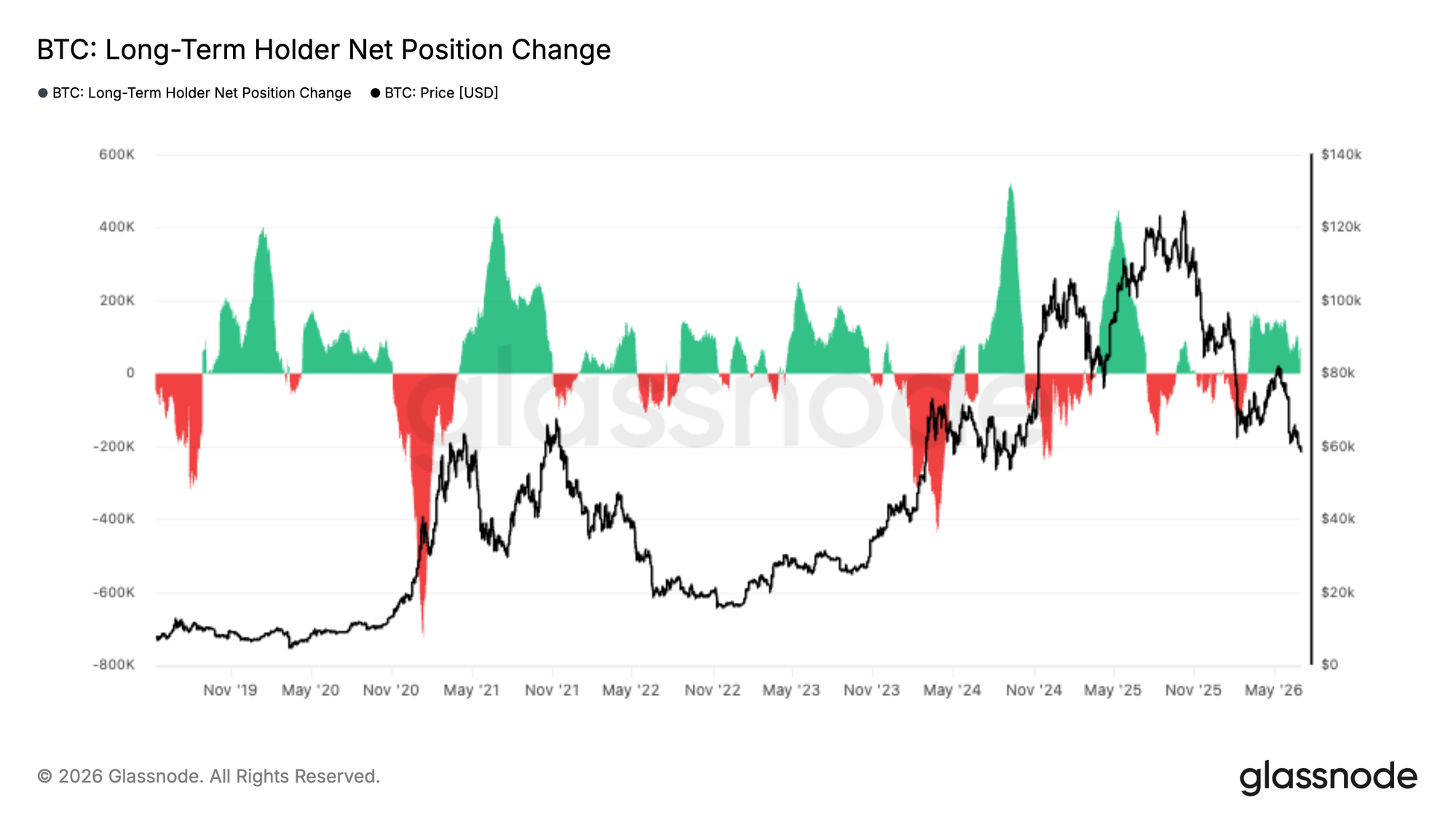
While these indicators could be useful in determining the early stages of a Bitcoin 4-year cycle, analysts contend that no single on-chain metric can precisely identify the market bottom before it is clear in hindsight.
What Could Trigger the Next Bitcoin Rally?
The next Bitcoin bull run is expected to be driven by both macroeconomic factors and institutional interest. Traders have been watching monetary policy, ETF flows, corporates, and regulation for signals that capital flow is returning to the digital asset space after a challenging year.
Federal Reserve Rates and Global Liquidity Cycle
Federal Reserve policy is one of the biggest macro drivers for risk assets. The Fed kept interest rates unchanged in its late July meeting. It also indicated that it would use incoming data to guide monetary policy decisions, although the markets continued to price in one more rate hike.
A rise in interest rates typically tightens financial conditions. Speculative assets, however, tend to see a rise in demand as liquidity increases, which is the reason why the crypto bull market cycle is closely followed. However, liquidity is only one of the factors influencing when is the next crypto bull run.
Bitcoin ETF Inflows and Institutional Buying
Historically, spot Bitcoin ETF flows have been a strong indicator of institutional demand. Although some funds’ net inflow has rebounded after weeks of heavy outflow in 2026, this has been limited, indicating that some institutional investors are slowly reentering the market.
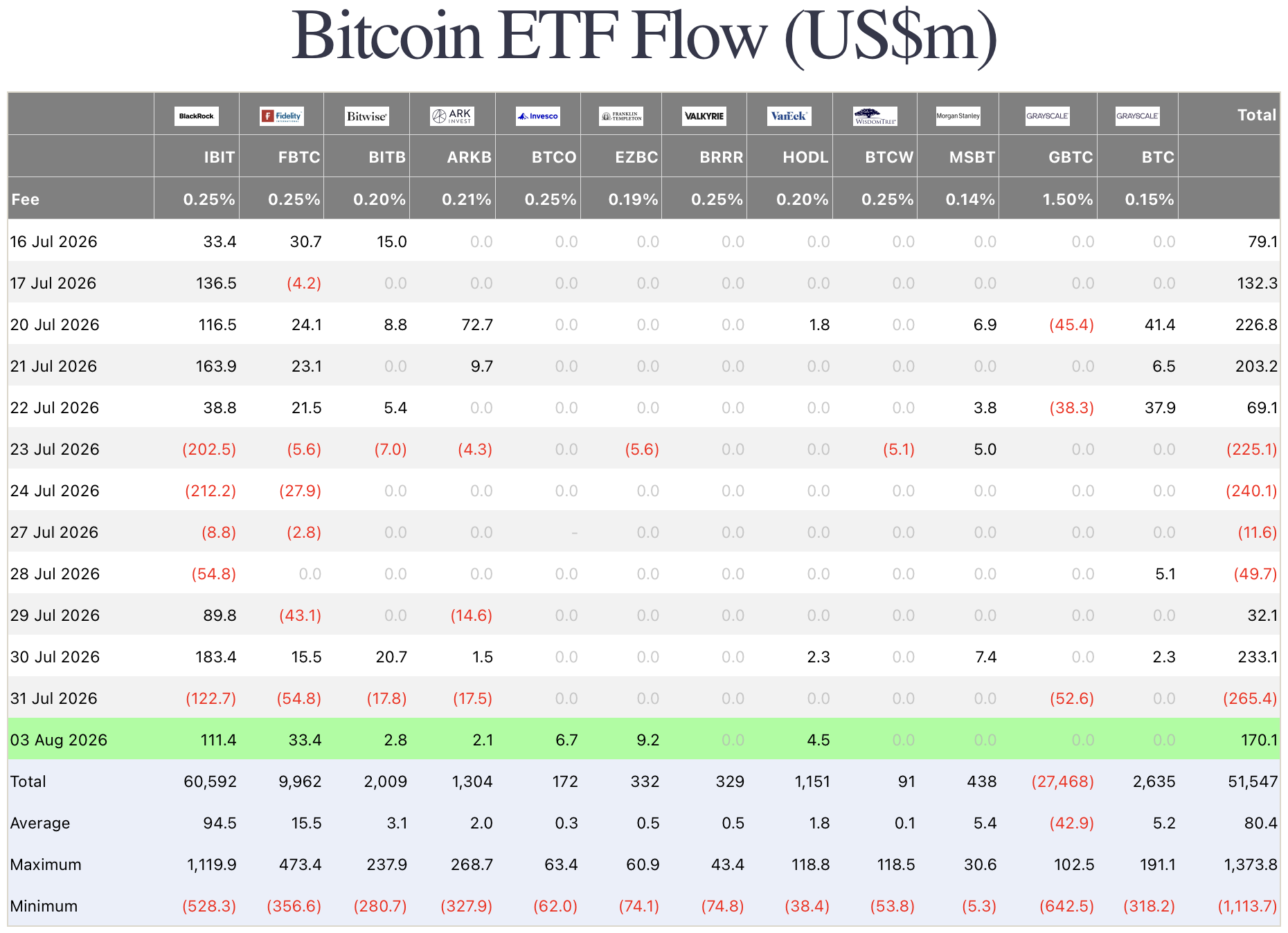
If this trend of ETF accumulation continues, it could strengthen the outlook of when will crypto recover, with Bitcoin ETFs emerging as a major
Corporate Bitcoin Adoption and Treasury Demand
Despite this, public companies still see Bitcoin as a treasury asset, although the pace of new public corporate buyers slowed in 2021 relative to 2020. Analysts have suggested that continued adoption of balance sheets could be a long-term demand driver if the environment stabilizes.
Thus, corporate accumulation alone may not be enough to drive Bitcoin bull run 2026, but it would fuel institutional demand and reduce supply in the market.
Crypto Regulation as a Market Catalyst
Regulatory clarity is important for institutional investors. Clearly defined regulation regarding digital assets, digital asset custody, and digital asset investment products will create an incentive for banks, asset managers, and public companies to enter a regulated digital securities market.
Analysts agree, however, that regulation would improve market confidence in the long term, but is likely only one of many factors behind the next market rally.
| Potential Catalyst | Why It Matters for Bitcoin |
| Federal Reserve rate cuts | Lower borrowing costs can improve liquidity and increase demand for risk assets. |
| Global liquidity growth | More capital in financial markets has historically supported Bitcoin and other cryptocurrencies. |
| Spot Bitcoin ETF inflows | Sustained inflows indicate stronger institutional demand and new capital entering the market. |
| Corporate treasury adoption | Public companies buying Bitcoin reduce available supply and strengthen long-term demand. |
| Clear crypto regulation | Greater regulatory certainty may encourage banks, funds and corporations to participate. |
| Stronger institutional participation | Long-term investors typically create more stable market trends than speculative retail flows. |
| Improving macroeconomic sentiment | Better economic conditions generally increase investors’ willingness to own higher-risk assets. |
Will Crypto Recover in 2026?
Bitcoin price outlook for the rest of 2026 is uncertain, with some analysts arguing that the outlook may improve if ETF demand returns and monetary policy becomes more accommodative, though the outlook has become less positive since the start of the year.
Bitcoin Price Outlook for the Rest of 2026
However, predictions remain wide-ranging. Citi decreased its one-year price target for Bitcoin from $112,000 to $82,000 due to ETF outflows, weak demand, and delayed US regulatory approval of crypto ETFs. When this was published, BTC traded at about $59,000: Citi’s bear-case scenario considered a price of $53,000 if macro conditions worsened.
Thus, most analysts do not use a year-end price target at all and offer ranges between $53,000 and $82,000 based on ETF flows, liquidity, and institutional participation.
🚨 2026–2027 BITCOIN ROADMAP
The next 6 months could look something like this:
→ August: Recovery begins
→ September: Bull Run accelerates
→ October: Euphoria returns
→ November: New $BTC ATH
→ December: Distribution begins
→ January: Selloff acceleratesThe crowd will… https://t.co/YTC4kTsfjDpic.twitter.com/IIpF86sxBg
— DANNY (@Danny_Crypton) August 3, 2026
Can Altcoins Recover After Bitcoin Turns Bullish?
Historically, altcoins outperform Bitcoin in prolonged Bitcoin rallies. Lower volatility levels combined with bullish sentiment in the market allow for rotation of funds from Bitcoin to more speculative cryptocurrencies.
That pattern may repeat if when will crypto prices recover is conditioned upon greater institutional capital inflows. According to CoinDesk Research, since late last year, capital has gravitated toward AI-based equities, rather than altcoin multi-assets.
Why the 4-Year Bitcoin Cycle May Be Changing
Although many investors have maintained Bitcoin 4-year cycle theory, some analysts believe that institutional adoption and Bitcoin spot ETFs have changed the nature of Bitcoin’s market structure, with price movements now being driven by macroeconomic policy and capital flows into regulated exchanges.
Moreover, Bitcoin price forecasts at long time horizons also fail to deliver predictions across regimes and should thus be understood as a framework rather than a rule.
Bullish and Bearish Scenarios for the Next Crypto Rally
Another bull case could be that ETF inflows resume, liquidity recovers, monetary policy remains supportive, and institutional demand improves, leading to a crypto recovery in 2026 as confidence rises and capital returns to the crypto market.
If, on the other hand, ETF redemptions continue, interest rates remain elevated and the SEC remains slow in approving ETFs, Bitcoin could be under pressure for longer, delaying the start of a new market cycle.
Bitcoin Recovery Signals Investors Should Watch
No single indicator suggests that Bitcoin is in a recovery, but analysts look at the price structure, trading volume and liquidity, and institutional positioning to see if the rally is backed by demand.
Bitcoin Reclaiming Key Resistance Levels
One of the biggest technical drivers of a stronger market is reclaiming key resistance levels. According to the on-chain analytics firm Glassnode, Bitcoin needs to hold above major cost-basis levels instead of briefly moving above them, as prior cycles often took weeks to months of consolidation at key levels to determine market direction.
For buyers wondering when will Bitcoin go back up, the answer seems to be when the price breaks above the resistance levels and that rise is consistent rather than leveraged.
Rising Trading Volume and Market Participation
Healthy recoveries are usually supported by rising spot trading volumes and broader market participation rather than speculative derivatives. According to analytics firm Glassnode, prior recoveries occurred on relatively muted spot activity, indicating a lack of conviction.
Increased participation from retail and institutional players may signal that when will crypto recover is being answered by improving market fundamentals rather than temporary market momentum and speculation.
JUST IN: $12 TRILLION CHARLES SCHWAB JUST WARNED THE #BITCOIN CLARITY ACT IS ABOUT TO DIE
“THERE’S A HANG UP OVER THE ETHICS CLAUSE”
“THE CLOCK IS TICKING”
“AT THE END OF THIS WEEK THE SENATE GOES HOME FOR SUMMER RECESS”
“WE’RE SKEPTICAL ANYTHING GETS ACCOMPLISHED IN THE… pic.twitter.com/DVUS3OqcAH
— The Bitcoin Historian (@pete_rizzo_) August 4, 2026
Stablecoin Liquidity Returning to Crypto Markets
Stablecoins are generally considered an available purchasing power in the crypto market. According to research by CoinDesk, the stablecoin market has exceeded $300 billion, yielding much more liquidity than previous market cycles.
High inflow of stablecoins into exchanges has historically led to higher prices, but liquidity alone is not a guarantee of price increases. Therefore, stablecoin inflow, ETF demand, and spot market interest are potential price metric considerations.
Institutional Accumulation Replacing Retail Speculation
Long-term recoveries are typically more durable if there is a shift from short-term retail speculation to institutional capital. According to Glassnode, long-term holders have returned to accumulation, while ETF flows are worse than at the same time in the previous cycle.
CoinDesk reported that other institutional vehicles, such as spot BTC ETFs and corporate treasury strategies, continue to absorb a large share of the available supply, even with the continued weakness in the market, and that this could bode well for when will crypto go back up.
| Recovery Signal | What It May Indicate |
| Bitcoin reclaims key resistance | Buyers are regaining control and market momentum is improving. |
| Higher spot trading volume | Stronger participation supports a more sustainable rally. |
| Stablecoin inflows | More available liquidity may increase buying pressure. |
| Positive Bitcoin ETF flows | Institutional capital is returning to the market. |
| Long-term holder accumulation | Experienced investors are increasing exposure despite weak sentiment. |
| Growing institutional demand | Corporate buyers and investment funds can strengthen long-term price support. |
| Improving market liquidity | Healthier liquidity reduces volatility and supports trend continuation. |
How Long Does It Take Bitcoin to Recover After a Crash?
Bitcoin has since recovered from every bear market, but the timing depends on a range of factors including macroeconomic conditions, general market liquidity, and investor demand at the time. Although past Bitcoin cycles can be used as a general guide, they do not provide an exact Bitcoin recovery timeline.
Bitcoin Recovery Timeline After the 2018 Bear Market
After reaching a previous all-time high of nearly $20,000 in December 2017, Bitcoin fell to a bear market low of about $3,200 in December 2018, a price decline of about 84%. It did not return to the previous all-time high until late 2020.
The 2018 cycle has shown that recoveries build momentum fairly slowly. Bitcoin spent months consolidating before momentum strengthened, making it a useful historical reference for today’s crypto recovery timeline.
Bitcoin Recovery Timeline After the 2022 Collapse
Bitcoin first dropped around 75% from its November 2021 peak to its late 2022 low of around $15,500, before reaching new all-time highs in 2024 amid increased institutional adoption and the introduction of US spot Bitcoin ETFs.
Even though the market recovery in 2021 was driven more by institutional participation than in 2018, it took almost two years from bottoming out for the market to reach new all-time highs.
Why Current Crypto Cycles May Recover Differently
In the current market cycle, the price action has been heavily influenced by spot ETF flows, corporate treasuries amassing BTC in the open market, and macroeconomic factors. According to CoinDesk Research, ETF outflows and liquidity conditions were the primary drivers behind the 2026 collapse and played no part in previous bear cycles.
As a result, analysts believe when will crypto recover in 2026 will depend not only on the halving cycle but also on institutional capital flows and monetary policy.
What Previous Cycles Can and Cannot Predict
In its history, Bitcoin has always recovered from large drawdowns, but there is no set way to know when it will rise again, as every cycle is different from the previous one.
Previous performance can imply or suggest market behavior, meaning previous cycles can be used in context by analysts, but this does not provide a basis for predicting when will Bitcoin price go back up.
| Bitcoin Cycle | Peak-to-Bottom Decline | Time to Recover Previous ATH | Key Recovery Driver |
| 2018 Bear Market | ~84% | About 2 years | Improving market liquidity and renewed investor demand |
| 2022 Market Collapse | ~75% | About 2 years | Institutional adoption and US spot Bitcoin ETFs |
| Current Cycle (2026) | ~50% from the 2025 ATH* | Recovery not yet confirmed | ETF flows, macroeconomic conditions and institutional capital |
Should You Buy Crypto While Prices Are Down?
Buying in a falling market can reduce the average cost of shares owned, but will also increase the investor’s unrealized losses if the market declines further. Analysts generally recommend keeping up risk management practices rather than attempting to identify the market bottom.
Why Some Investors Accumulate During Market Fear
Long-term investors have seen heavy selling as a buying opportunity when market sentiment has become particularly negative.
According to on-chain analytics firm Glassnode, some cohorts of wallets previously in profit have resumed amassing through the latest correction, suggesting that holders more experienced in the market are soaking up supply.
This behavior reflects a long-term investment approach rather than confidence that the market has already bottomed. Investors considering will Bitcoin recover typically focus on gradual accumulation instead of trying to identify the exact turning point.
$BTC rejected the previous weekly low and left equals.
Currently price is rejecting the 64K level, which is an important momentum level for this week.
Now we rejected the 62.3K PWL, in terms of direction the market is indecisive.
We engineered lots of liquidity at those lows… pic.twitter.com/U0sEIM0cXw
— Lennaert Snyder (@LennaertSnyder) August 4, 2026
Risks of Buying Before a Confirmed Bottom
The risk is that prices move lower still after the purchase. For example, Glassnode opines that Bitcoin is still in a corrective phase rather than a recovery phase, as ETF outflows, spot weakness and defensive positioning persist.
Because market bottoms can only be confirmed in hindsight, investors asking is Bitcoin going to recover should recognize that no indicator can eliminate downside risk before sentiment improves.
Dollar-Cost Averaging vs Waiting for a Reversal
Dollar-cost averaging (DCA) decreases exposure to short-term volatility by spreading out purchases over time, so that the asset is purchased at a variety of prices. Waiting for confirmation may decrease the probability of purchasing too early and holding the asset while prices are declining. On the other hand, there may not be enough time to benefit from a recovery.
For people asking when will Bitcoin go back up, both methods are equally good. The choice is mainly one of personal risk tolerance, time frame, and portfolio management, rather than market timing.
What Experienced Investors Look for During Downturns
Professional traders track on-chain accumulation, ETF inflows, spot activity, and liquidity. According to Glassnode, the HODLer cohort has resumed accumulation, but institutions remain limited due to persistent ETF outflows.
However, seasoned investors tend to look for multiple signals when considering increasing exposure rather than just volatility in regard to when will crypto recover.
Why Is Crypto Down Today?
The combination of ETF redemptions, leveraged liquidations, international events, and risk-off sentiment helps explain why is crypto crashing again, although the decline is being driven by several factors rather than a single event.
Specific corporate Bitcoin sales, security concerns, and operational disruptions have not helped; nonetheless, no single factor can be attributed to the entire slump.
When Will Bitcoin Go Back Up?
There is a lack of consensus when will Bitcoin go back up. It is believed that Bitcoin will recover through increasing ETF inflows, improving liquidity, favorable macroeconomic conditions, and increasing institutional demand, rather than by a quick and temporary price appreciation.
Is Bitcoin in a Bear Market?
Since Bitcoin peaked at an all-time high in October 2025, it has lost nearly half of its value and is now in a bear market by many standards. Whether the current market cycle for Bitcoin will become a longer bear market will depend on demand, liquidity, and macroeconomic conditions.
Has Bitcoin Reached the Bottom?
No one can ever predict a market bottom, and even with some improvements in on-chain accumulation, analysts are still looking at ETF flows, trading volume, and institutional participation before declaring the market has stabilized.
How High Can Bitcoin Go After Recovery?
Citi lowered its base-case 12-month price target in the quarter to $82,000, stating that price development will depend more on ETF demand, regulation, and the general market environment than on the price action of previous cycles.
Will Altcoins Recover When Bitcoin Rises?
Historically, most altcoins are only able to rise in price after Bitcoin enters a new uptrend, and similar conditions may result if liquidity and momentum are able to return to Bitcoin.
Is Now a Good Time to Buy Bitcoin?
The timing of entering is determined by the risk profile of the investor and their time horizon. Instead of timing the lowest price, analysts suggest dollar-cost-averaging and observing economic trends and institutional adoption.
