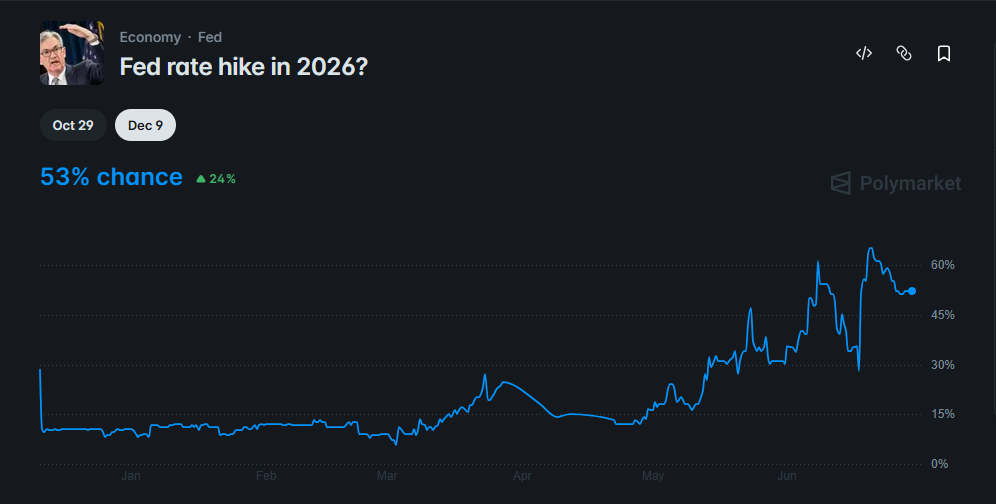

World opened its standalone platform at world.xyz on September 9 to more than one million waitlisted users, after operating inside the Phantom wallet since the summer. More than 150,000 markets have been created across sports, crypto, politics, finance, economics, and culture, with the initial lineup covering every NFL regular-season game, seven soccer leagues, Formula 1, the 2026 midterms, and Federal Reserve policy decisions.
Resolution runs through Chainlink Data Streams and the Chainlink Runtime Environment, with no human resolution panel, no token-holder vote, and no dispute window delaying payouts. The protocol is non-custodial, holds no customer funds, routes orders to liquidity providers on Solana, settles in CASH, and requires no brokerage account or exchange registration. The site went offline on launch day under traffic from the waitlist before returning.
Every argument about prediction markets this year has been about who is allowed to run one. New York suing for billions. A dozen state gaming regulators issuing orders. Three California tribes at the Ninth Circuit. A bill to ban sports contracts outright. Almost none of it touches the question that decides whether these things work at all: how does the market know who won? Until this week there were two answers shipping in production.
Kalshi settles with a rulebook, applied
Kalshi settles with a rulebook, applied by a licensed operator with a regulator behind it. Polymarket settles with an optimistic oracle, where an outcome is proposed, challenged and, if contested, voted on by people holding a governance token. On September 9, World shipped a third. Chainlink data feeds settle the contract automatically the moment the game ends. No panel. No vote.
No dispute window. Nobody to appeal to, because the settlement is a program that already ran. It launched to a waitlist of over a million people and took its own website down. Worth understanding what that third model buys and what it gives up, because it is not obviously better or worse than the other two. It is differently broken, which is the only honest thing anyone can say about resolution mechanisms.
What World actually is None of the individual pieces is novel. The combination is. World launched inside the Phantom wallet during the summer and opened a standalone site at world.xyz on September 9, extending access to a waitlist exceeding one million users. More than 150,000 markets have been created since the Phantom integration went live, spanning sports, crypto, politics, finance, economics, and culture.
The opening lineup is broad: every NFL regular-season
The opening lineup is broad: every NFL regular-season game, seven soccer leagues, Formula 1 races, binary contracts on the 2026 United States midterm elections, and contracts on Federal Reserve policy decisions. Equity, commodity, and weather markets are planned. https://twitter.com/cryptodotnews/status/2092813351701147861 Mechanically, each market issues yes and no contracts priced between zero and one dollar, and the verified outcome settles one side at a dollar.
That is the standard binary event contract structure our guide to the instrument covers. Three structural properties distinguish it. It is non-custodial: the protocol holds no customer funds, and assets move only when a user enters a market. Orders route to liquidity providers on Solana, not through an off-chain order book. And settlement is in CASH, the dollar-backed stablecoin used inside Phantom, with winning positions redeemed automatically in the wallet.
No brokerage account is required. No exchange registration is required. Users pay network fees to open and close positions. The three resolution models Nobody has put the three side by side, so here they are. Kalshi: rulebook resolution by a regulated operator. Contracts settle according to criteria published in advance, applied by an exchange holding designated contract market status.
A named entity makes the determination, a federal
A named entity makes the determination, a federal regulator supervises it, and participants have a complaints path. Our guide to that licence sets out the obligations. The operator can correct errors, and the operator exercises discretion, which are the same property viewed from two angles. Polymarket: optimistic oracle with token-holder voting. An outcome is proposed, a challenge window opens, disputes escalate to a vote by holders of the oracle’s governance token, and the result finalises on chain.
Our guide to that mechanism explains the stages. Nobody can unilaterally decide an outcome, and nobody can correct one after finality, which is again the same property from two angles. https://twitter.com/cryptodotnews/status/2082304103204409491 World: automated data feeds with no dispute stage. Chainlink Data Streams supply the market data and the Chainlink Runtime Environment executes settlement once a game concludes or a defined event reaches its deadline.
The published description is explicit that there is no human panel, no token-holder vote, and no dispute window delaying payouts. The tradeoff runs consistently across all three and is worth stating as a principle. Every mechanism that removes discretion also removes correction. Kalshi can fix a mistake and can also make a discretionary call you dislike. Polymarket cannot make an arbitrary call and cannot fix one either, which is precisely the tension our guide to delisted and voided markets examines.
World removes the most discretion of the three
World removes the most discretion of the three and therefore removes the most correction. What automated settlement is good at Inside a specific range this design is clearly better than the alternatives, and the case deserves its strongest form. Objective outcomes settle instantly. A football match ends with a score. A Bitcoin price at a stated timestamp is a number. A Federal Reserve rate decision is a published figure.
For contracts resolving on unambiguous, machine-readable data, a dispute window is pure latency, delaying payout to accommodate an argument nobody will make. Automated resolution pays immediately, which is a real user benefit and the clearest competitive advantage the design has. It removes the failure mode that has damaged the category most. Contested resolutions on the oracle-based venue have produced the most reputational damage prediction markets have suffered, because a market resolving against what most observers believed happened is the single thing that destroys confidence in a forecasting instrument.
Removing the discretionary stage removes that possibility for contracts where the data is unambiguous. And it scales. A resolution process requiring human attention constrains how many markets can exist. More than 150,000 markets created since the summer is a number that would be operationally impossible under rulebook administration, and it is achievable precisely because resolution costs nothing per market.
Polymarket has moved in the same direction
Polymarket has moved in the same direction for price-based markets, adopting oracle-based settlement where the data permits, which is confirmation that the design is correct for that category, not a criticism of World for adopting it. What automated settlement is bad at The limits are just as specific, and they sit in exactly the markets people care about most. Ambiguous events have no data feed.
A contract on whether an official will resign, whether a conflict qualifies as a ceasefire, or whether a statement constitutes an endorsement cannot be settled by a price feed, because the disputed element is the definition and not the measurement. These are also disproportionately the markets people care about, which is why the oracle-based venue’s most contested resolutions have involved exactly this category.
Data feed failure has no remedy. If a feed reports incorrectly, reports late, or reports a value that does not reflect what happened, an automated system settles on it. With no dispute window there is no stage at which anyone can say the input was wrong before money moves. The integrity of the entire system rests on the integrity of the data
Edge cases resolve mechanically
Edge cases resolve mechanically. A postponed match, an abandoned race, a rescheduled announcement, a datarovisions. An automated system handles them according to whatever the contract specified in advance, and contracts cannot anticipate everything. And there is nobody to appeal to. This is the practical consequence of the architecture
A participant who believes a market settled wrongly on Kalshi can complain to an exchange and to a regulator. On the oracle-based venue they can, in principle, participate in a dispute. On World, the settlement is the output of a program that already ran. None of this makes the design wrong. It makes it correct for a specific class of contract and unsuitable for another, and the honest question is which class dominates the platform’s 150,000 markets.
The regulatory position Here is the part nobody covering the launch has touched. World lists contracts on every NFL regular-season game, the 2026 United States midterm elections, and Federal Reserve policy decisions. Those are precisely the contract categories currently under attack in the United States. Our status page on the sector maps the fights: state gaming regulators contending that sports event contracts are wagers requiring state licensing, California tribes litigating under federal Indian gaming law, and a bipartisan bill that would prohibit sports contracts on regulated exchanges outright.
The venues fighting those battles hold federal licences
The venues fighting those battles hold federal licences. Kalshi is a designated contract market. Polymarket operates domestically through an exchange it acquired. Both submitted to registration, and both are being sued anyway. World requires no brokerage account and no exchange registration, holds no customer funds, and routes orders to liquidity providers on a public blockchain.
That is a structurally different posture, and it raises the question the coverage has not: what happens when a non-custodial protocol lists the same
