

Some offers on this page are from advertisers who pay us, which may affect which products we write about, but not our recommendations. See our Advertiser Disclosure.
7 best crypto wallets of 2026: The winners on fees, security, and chain coverage
Not all crypto wallets are as secure or transparent as they appear. Some charge more than they disclose, some have thinner security histories than their popularity suggests, and some won’t support the networks you actually use.
We picked the most widely used self-custody wallets that give you full control of your funds with no third party able to access or freeze them. Then we ran each wallet through rigorous testing to find the best ones.
At a glance: Best crypto wallets
Best software wallet: Trust Wallet
Best for Ethereum and DeFi: MetaMask
Best for NFTs and active traders: Bitget Wallet
Best for desktop users: Exodus
Best for hardware storage on a budget: SafePal
(Disclosure: Yahoo Finance has a partnership with Coinbase.)
1. Ledger: Best hardware wallet
Ledger at a glance
A secure hardware wallet with fully offline private key storage, a decade-long breach-free record, and a companion app anyone can independently verify.
Swap fee:$0 service fee, network and third-party fees still apply
Hardware wallet:Built-in Ledger device required for cold storage
Platforms:iOS, Android, Windows, macOS, and Linux
Why Ledger stands out
Ledger has been operating since 2014 and has never suffered a breach that put customer funds at risk. In an industry where wallets have been drained and trading platforms have collapsed, that record carries real weight. Over the past decade, Ledger has shipped more than 8 million devices and today secures an estimated 20% of the global crypto market cap.
The companion app is fully open-l of transparency most wallets don’t offer. Your private wallet key is generated inside the hardware device and stays there, so even if your phone or laptop gets compromised, the key is out of reach. Every transaction requires the physical device to sign it
Ledger has its hardware independently tested by outside security firms, and those results are publicly available for anyone to review. The wallet also runs an active bug bounty program, which pays independent researchers to find and report security vulnerabilities before anyone else can exploit them. That kind of continuous external scrutiny is what a serious security posture looks like in practice.
The wallet supports more than 90 blockchains and over 15,000 coins and tokens, including bitcoin, ether, solana, and major stablecoins like tether and USDC. Staking is available on several coins, including ethereum, solana, cardano, and more, letting you earn passive rewards on holdings you’re already keeping long term. Nonfungible token (NFT) support is built into the app, including buying, selling, minting, and organizing digital art and collectibles.
To connect to decentralized apps (dApps) that run on a blockchain rather than on a company’s servers, the wallet offers native integration and WalletConnect, a protocol that securely connects to thousands of blockchain-based applications.
What could be better about Ledger
The hardware requirement is the one thing software wallets don’t ask of you. As a hardware wallet, Ledger offers cold-storage protection but requires you to buy a physical device that starts at about $60. That up-front cost can be a barrier for users who are just getting started.
Swap fees fall outside Ledger’s control. Third-party providers handle every in-app swap, so the cost varies by transaction and provider. Unlike many software wallets, there’s no single stated rate to plan around.
Token coverage of around 15,000 assets is narrower than software wallets like Trust Wallet, which covers tens of millions. If you trade newly launched or low-cap tokens frequently, a software wallet covers more ground.
2. Trust Wallet: Best software wallet
Trust Wallet at a glance
Wide chain and token coverage across more than 32 million assets, combined with a $0 service fee on swaps and a gas sponsorship feature that covers network costs on some transactions. Our rating:4.9 out of 5 ⭐
Founded: 2017 Supported blockchains: 110+ Supported tokens:32 million+ Swap fee:$0 service fee, network and third-party fees still apply Hardware wallet: Ledgersion
Why Trust Wallet stands out
Trust Wallet launched in 2017 and has grown to over 220 million users worldwide. It supports more than 110 blockchains and more than 32 million individual assets. Few wallets come close on raw coverage. If you manage tokens spread across several different networks, it’s one of the most comprehensive starting points available.
Trust Wallet adds nothing on top of swap transactions. You pay the network’s gas costs (the small fee the blockchain charges to process a transaction) and any fee the third-party provider charges, but the wallet takes nothing.
For example, a $1,000 swap would cost $0 in wallet fees at Trust Wallet and about $8.75 at MetaMask. For eligible transactions, Trust Wallet also covers the gas fee through its gas sponsorship feature.
Several external security firms have independently audited the wallet, and the results are publicly available for anyone to review. Trust Wallet also runs a bug bounty program that compensates independent researchers who find and report security vulnerabilities.
Ledger hardware wallet integration is available through Trust Wallet’s browser extension, with a step-by-step connection guide. You can also browse dApps on a native browser and connect through WalletConnect.
What could be better about Trust Wallet
Only the cryptographic library, the component that handles the underlying key operations, is open-h can’t be independently reviewed at the code level, which puts it behind Ledger on the transparency front
There’s no built-in NFT marketplace. You can send, receive, and store nonfungible tokens, but buying or selling them requires connecting to an external platform like OpenSea through the dApp browser.
Trust Wallet runs on iOS, Android, and as a browser extension, but there’s no standalone desktop app. If you work primarily from a computer, the Exodus wallet serves that use case better.
3. MetaMask: Best for Ethereum and DeFi
MetaMask at a glance
A well-established wallet for Ethereum and decentralized finance (DeFi) with 10 years of continuous operation and compatibility across virtually every protocol and decentralized app on the market.
Supported blockchains: 300+ Supported tokens: 2 million+
Hardware wallet: Ledger and Trezor
Platforms: iOS, Android, web app, and browser extension
Why MetaMask stands out
MetaMask was founded in 2016 and has been the standard for Ethereum-based activity for years, reflecting genuine utility rather than brand recognition. Most DeFi protocols that let you lend, borrow, and trade without a bank treat MetaMask as the default connection method. The wallet now counts more than 30 million monthly active users.
It supports more than 50 networks natively and connects to about 250 more networks through ChainList, a public directory of compatible blockchain networks. That covers more than 2 million ERC-20 tokens, the standard format for assets on Ethereum and compatible chains.
MetaMask is serious about security. You can connect both Ledger and Trezor to the wallet through step-by-step integration guides, making it straightforward to add a physical security layer without switching apps.
Additionally, multiple third-party security firms have audited MetaMask, and their reports are publicly available. The wallet’s bug bounty program has paid out more than $600,000 to researchers who found and reported vulnerabilities, which reflects a program that gets meaningful use.
What could be better about MetaMask
MetaMask charges 0.875% on every swap. On a $1,000 trade, that’s $8.75 in wallet fees before network costs. Trust Wallet charges nothing for the same transaction. The fee funds ongoing development, but it adds up for frequent traders.
The code transparency has a catch. MetaMask’s code is readable, but it operates under a commercial license from ConsenSys rather than a standard open-ode, but the terms differ from a fully open-
There’s no built-in NFT marketplace, which means that sending and receiving nonfungible tokens works, but buying or selling them requires an external platform.
4. Base: Best for Coinbase users
Base at a glance
A self-custody wallet with more than 250 supported networks, NFT access built in, and the ability to fund your wallet directly from a Coinbase account or debit card.
Platforms: iOS, Android, web app, and browser extension
Why Base stands out
Coinbase launched the Base wallet in 2017 as a self-custody wallet that’s separate from the exchange. The wallet supports more than 250 networks, including bitcoin, solana, dogecoin, and litecoin, giving it a broad multi-chain reach.
Sending USDC on Base carries no fee and settles instantly, whether you’re paying someone locally or sending money across the world. You can also fund your wallet directly from a Coinbase account or debit card without leaving the app.
NFT access is built directly into the Base app, absorbing the functionality of Coinbase’s standalone NFT marketplace after it shut down in 2024. The wallet also offers a dApp browser and supports WalletConnect for connecting to web-based crypto apps.
Coinbase’s publicly traded company status raises the security bar, and Base clears it. An independent audit report is publicly available, and the bug bounty program offers rewards up to $5 million USDC, one of the highest ceilings among the wallets we evaluated. That kind of investment in finding vulnerabilities before they become problems shows a commitment to protecting the wallet’s users.
What could be better about Base
Desktop users get a browser extension rather than a native app. That works for basic tasks, but it doesn’t match the full experience of a standalone app for Windows, macOS, or Linux.
The swap fee tops out at 1%, above MetaMask’s 0.875% and well above Trust Wallet’s $0 service fee. On a $1,000 swap, that’s up to $10 in wallet fees before gas costs.
And while audit reports are available, the consumer app code isn’t publicly open for independent review. Only developer tools are published online, which puts Base behind Ledger and MetaMask on the transparency front.
5. Bitget Wallet: Best for NFTs and active traders
Bitget Wallet at a glance
A noncustodial wallet built around active trading, with a built-in NFT marketplace, real-time token data, and direct access to meme coin launchpads across 130+ chains.
Platforms: iOS, Android, and browser extension
Why Bitget Wallet stands out
Bitget Wallet covers more than 130 blockchains and over 1 million tokens, with a built-in NFT marketplace for buying, selling, and minting digital collectibles and a dApp browser for accessing decentralized apps directly from the wallet. But what separates it from most wallets here is how much it builds around active trading.
When you swap, the wallet scans available liquiditythan routing you through a single exchange. Each token page shows real-time price charts, market cap, circulating supply, holder counts, and transaction history, the kind of data most wallets make you look up elsewhere
For traders who follow early-stage launches, the wallet connects directly to pump.fun and Four.meme, letting you view and trade new tokens at the earliest stages without leaving the app.
Hardware wallet integration is simple and practical. Keystone devices connectrity firms have independently audited the wallet, and those results are publicly available. On top of that, a bug bounty program rewards independent researchers who find and report vulnerabilities
What could be better about Bitget Wallet
Bitget Wallet doesn’t disclose a specific swap fee before you connect a wallet. That means you won’t know what a swap will cost you until you’re already in the app and ready to trade, which makes it harder to plan ahead.
The consumer app code is not publicly available, which limits how independently the wallet’s security can be verified.
Hardware wallet support is limited to Keystone won’t connect to it
6. Exodus: Best for desktop users
Exodus at a glance
A desktop-first self-custody wallet with full apps for Windows, macOS, and Linux, built-in portfolio tracking, and access to Solana NFTs
Hardware wallet: Ledger and Trezor
Platforms: iOS, Android, Windows, macOS, Linux, and browser extension
Why Exodus stands out
Exodus is a software wallet that’s built more thoroughly for desktop than most wallets we evaluated. Full apps run on Windows, macOS, and Linux alongside iOS, Android, and a browser extension. This improves your experience if you manage your crypto primarily from a computer.
Exodus supports hardware wallet integration on both platforms, but the setup differs by device. Trezor connects to both Exodus Desktop and Mobile, while Ledger connects only to Exodus Mobile. Once paired, your hardware wallet shows up as a separate portfolio inside Exodus, so you can send, receive, and swap directly from it without opening another app.
Through a partnership with Magic Eden, one of the largest NFT marketplaces on Solana, you can browse, buy, and sell Solana NFTs directly inside the app. Portfolio tracking is built into the interface, with real-time prices, charts, and performance data. Swapping your coins is also available with rates starting at 0.5%. That puts it below MetaMask’s 0.875% and makes cost planning straightforward.
Security is backed by a HackerOne bug bounty program that publishes tiered reward amounts, with independent researchers regularly finding and reporting vulnerabilities.
What could be better about Exodus
The NFT marketplace only covers Solana. If you hold NFTs on Ethereum or other chains, you’ll need an external platform to manage them.
The core app is not open-ailable report from an external firm covers the core wallet, which puts it behind most wallets we evaluated on the transparency front
WalletConnect is no longer available for wallets created after April 2026, and neither is the in-app mobile dApp browser. New mobile users who want to access DeFi protocols are limited to the browser extension.
7. SafePal: Best for hardware storage on a budget
SafePal at a glance
A budget-friendly option with its own hardware device line, a model that keeps your private key completely offline, and one of the lower swap fees among the wallets we evaluated.
Hardware wallet:SafePal S1, X1, and S1 Pro
Platforms:iOS, Android, and browser extensions
Why SafePal stands out
SafePal makes its own hardware devices, which gives it a cost advantage over most wallets on this list. Its most popular model, the S1, keeps your private key completely offline with zero wireless or wired connectivity. Instead, you sign every transaction through a QR code scan, so your private key never touches an internet-connected surface at any point.
The newer X1 trades that approach for Bluetooth connectivity, pairing directly with the SafePal mobile app for a faster signing experience. Both devices cost less than comparable Ledger models, making offline key storage more accessible for users on a tighter budget.
SafePal’s swap fee is 0.2% per order, one of the lower stated rates among wallets we evaluated. A $1,000 swap costs $2 in wallet fees, compared to $8.75 at MetaMask. The built-in NFT marketplace lets you mint, buy, and list nonfungible tokens directly inside the app.
Staking is built directly into the SafePal app, letting you earn passive rewards on your holdings without connecting to a third-party platform, unlike most wallets that require you to leave the app to access staking pools.
What could be better about SafePal
SafePal has no bug bounty program. No published reward scheme exists for researchers who find and report vulnerabilities. Every other wallet we evaluated runs one with stated payouts, and that gap is hard to overlook for a wallet that focuses on trust and security.
The one publicly available audit from an external firm covers a specific feature, not the core wallet itself. That makes SafePal’s fundamental security harder to independently verify than most wallets we evaluated.
There’s no standalone desktop app. SafePal runs on iOS, Android, and as a browser extension for Chrome, Firefox, and Edge.
Crypto wallets that didn’t make our top seven
Several popular wallets scored below the top seven. Here’s what held each one back.
Crypto.com Onchain
Crypto.com Onchain is the self-custody wallet from one of the largest crypto exchanges in the world, with built-in staking, NFT management, and a clean interface for DeFi access. It handles the basics well, but chain and token coverage sits at 40 blockchains and around 1,000 tokens, well below most wallets we evaluated. For users managing a diverse portfolio across multiple networks, this coverage can feel limiting.
Phantom
Phantom started as the go-to wallet for Solana and has since expanded to eight networks, adding bitcoin, Ethereum, and a handful of others. It’s genuinely well-built for what it covers, with clean NFT tools, built-in advanced trading, and a Phantom Cash feature that lets you spend crypto with a virtual debit card. The limitation is the wallet’s scope. Eight supported networks are a tight list compared to wallets covering 50 or more, and the total supported token count isn’t publicly disclosed.
Atomic Wallet
Atomic Wallet is a straightforward multi-chain software wallet covering more than 50 blockchains with a 0.5% swap fee. However, among the factors that kept it off our list is a 2023 security breach that resulted in substantial user losses. Additionally, the wallet’s code is fully closed, no external audit covers the core app, and there’s no hardware wallet support.
Blockchain.com Wallet
Blockchain.com has operated since 2011, making it one of the oldest names in crypto wallets. But the product hasn’t kept pace. It supports only 13 blockchains, has no hardware wallet integration, and the one external security audit available is under a non-disclosure agreement, far less transparent than wallets that publish results openly.
Zengo
Zengo takes a genuinely different approach to wallet security. Instead of a seed phrase, it splits your private key between your device and Zengo’s servers using a method called multiparty computation, so neither side alone can access your funds. That removes one of the most common ways people lose access to their crypto. The trade-off is that every transaction requires Zengo’s servers to participate, which introduces a dependency that fully offline wallets don’t have. Chain coverage is also limited to around 10 networks, which impacted its overall ranking.
How crypto wallets work
Understanding a few core components of how crypto wallets tick makes it easier to evaluate them and choose one that actually fits how you use crypto.
What a crypto wallet actually stores
Your cryptocurrency exists on the blockchain, a public digital record maintained by thousands of computers worldwide. The wallet stores your private key, a unique credential that proves you own these cryptocurrencies and authorizes every transaction you send.
Your private key pairs with a public address, the destination you share when you want someone to send you crypto. When you send funds, the private key signs the transaction behind the scenes to confirm it came from you. The wallet handles this invisibly. You just click confirm.
If you lose the private key, you lose access to those coins. If someone gets a hold of your key, they’ll have full control of your funds.
Seed phrases: your backup key
When you first set up most wallets, the app generates a seed phrase, a sequence of 12 or 24 randomly chosen words that can reproduce all of your private keys. Write it down on paper and store it somewhere secure, separate from your phone or laptop. Anyone who finds your seed phrase can gain immediate, complete access to your funds.
If you lose your wallet but keep your seed phrase, you can restore the entire wallet on any compatible app. However, if you lose both, your funds become permanently inaccessible. No wallet provider can recover them for you.
Custodial vs. noncustodial wallets
The difference between custodial and noncustodial wallets comes down to one factor: who holds the private keys. All seven wallets we covered are noncustodial.
With a noncustodial wallet, the provider can’t access your funds, freeze your account, or recover your assets if you make a mistake. That’s the upside. The downside is that full control comes with full responsibility. If you lose your seed phrase, there’s no support team that can reverse that.
Most crypto exchanges use custodial accounts by default. When you leave crypto sitting on an exchange, the exchange holds the keys on your behalf. Several major exchanges have been hacked or collapsed in recent years, taking customer funds with them. When the exchange holds the keys, its problems become your problems.
Hot wallets vs. cold wallets
The main distinction between hot and cold wallets is whether your private key ever touches an internet-connected device.
Hot wallets are fast and convenient, but that internet connection creates a potential vulnerability for anyone targeting your device. A cold wallet stores private keys entirely offline. Because the key is never visible online, remote attackers can’t reach it. Every transaction requires the physical hardware to sign it, which adds a step that’s worth taking for anything you’re holding long-term or in large amounts.
How to choose a crypto wallet
The right wallet depends on how you actually use crypto. A few key factors can narrow the field and rule out options that don’t fit your situation.
1. Decide how much security you need
If you’re holding a significant amount of crypto for the long run, a hardware wallet that keeps your private key completely offline is worth the up-front cost. The device acts as a physical barrier between your funds and anyone trying to access them remotely. If you’re trading regularly with smaller amounts, a well-audited software wallet with an active security program is a reasonable alternative.
2. Check which networks you actually use
Chain and token coverage vary widely across wallets. A wallet with support for 10 networks works fine if you stay within those chains, but it becomes a problem the moment you want to hold or move something outside them.
Before choosing, list the blockchains and tokens you actually use or plan to use, and confirm the wallet supports them. Swapping between chains you can’t access in one wallet creates extra steps, fees, and unnecessary risk.
3. Know what you’ll pay on swaps
Swap fees across the wallets we evaluated range from zero to 1% per transaction. On a $1,000 swap, that’s the difference between paying nothing and paying $10 in wallet fees, before network costs. If you swap frequently, those differences compound fast.
4. Think about how you prefer to work
Some wallets prioritize mobile, others focus on desktop, and a few support both well. If you manage crypto primarily from a laptop or desktop, make sure the wallet has a proper app for your operating system, not just a browser extension. Extensions are convenient but don’t offer the same full experience as a native app. Similarly, if you use multiple devices, confirm the wallet works across all of them without requiring workarounds.
5. Verify the wallet’s transparency before you commit
Fee disclosure, open-arest signals of a trustworthy wallet. A wallet that keeps its code closed, doesn’t publish security audit results, and has no program for rewarding researchers who find vulnerabilities doesn’t inspire confidence. You don’t need to read the code yourself. The fact that others can, and that the company invites that scrutiny, tells you something important about how it operates
Best crypto wallets FAQs
What’s the difference between a crypto wallet and a crypto exchange?
An exchange lets you buy and sell crypto with regular currency and typically holds your assets in a custodial account, meaning the exchange controls the keys. A wallet is a tool for managing crypto you already own, where you hold the private keys yourself. Self-custody wallets put that control entirely in your hands.
What’s the safest crypto wallet?
Hardware wallets that keep private keys completely offline offer strong security. For software-only wallets, look for independent security audits with publicly available results, an active bug bounty program that pays researchers for finding vulnerabilities, and a track record without major incidents. Open-verification that the wallet works as described
Do crypto wallets charge fees?
Wallets generally don’t charge fees for holding or receiving crypto. Fees come up in two situations: when you send crypto, you pay a network gas fee to the blockchain’s validators, not the wallet, and when you swap inside the wallet, most add a service fee on top. Among the wallets we evaluated, swap fees range from $0 at Trust Wallet to 0.2% at SafePal, 0.5% at Exodus, 0.875% at MetaMask, and up to 1% at Base. On a $1,000 swap, that range is $0 to $10 in wallet fees before gas costs.
Methodology: How we choose the best crypto wallets
We identify the most widely used self-custody crypto wallets available to U.S. users, then narrow the list to those with meaningful adoption and support for multiple cryptocurrencies and blockchains.
We then score each wallet across five categories:
Security and custody:We consider how the wallet protects your private keys, what independent verification exists, and whether hardware wallet support is available.
Asset and network coverage:We measure the range of blockchains and tokens each wallet supports, and how much it costs to swap between them.
Features and platform:We check which devices and browsers the wallet runs on, NFT support, and how it connects to decentralized apps.
User experience:We evaluate how the wallet holds up in day-to-day use, available support options, and how it has been performing over its operational history.
Transparency: We look at whether the wallet is transparent about its fees and runs a program that invites independent researchers to find and report vulnerabilities.
We select the top seven wallets based on combined performance across all five areas. We calculated scores independently, with no input from or compensation by any wallet we evaluated.
Editorial disclaimer:The information on this page is for educational purposes and isn’t meant as investment advice. Cryptocurrencies are volatile assets, and past performance doesn’t indicate future results. Research any platform independently and consult a qualified financial advisor before making any investment decision.
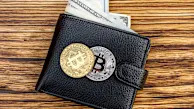
Hardware vs. software crypto wallets: Which is right for me?
Learn how hardware and software wallets differ, and which option makes the most sense depending on how you use your crypto.

The 7 best crypto exchanges in 2026: Our top picks after hands-on testing
Not all crypto exchanges are as affordable or as safe as they appear. We tested popular U.S. platforms to find the most cost-effective and secure options for every type of buyer.
How to keep your crypto safe
From exchanges to cold storage, learn practical ways to safeguard your crypto, secure your accounts, and avoid costly mistakes.

What is a crypto wallet? A beginner’s guide to crypto storage.
Find out what a crypto wallet is, how they work, and which type is right for you.
Not your keys, not your coins: Why a self-custody wallet makes sense for crypto investors
Not your keys, not your crypto: Understand the risks of custodial wallets and why self-custody is essential for serious crypto investors.

How to use your crypto: A user’s guide to transacting safely
Learn how to use crypto safely with our comprehensive guide to self-custody. Discover the best practices for managing your wallet and transacting.
