
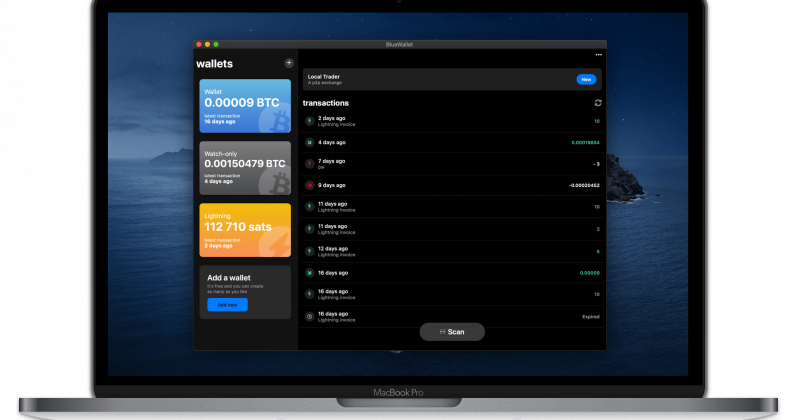

Users can now supplement or replace device-generated randomness with coin flips and dice rolls when creating a Bitcoin wallet
Add us on Google
byEditorial Team
Aug. 1, 2026
Most people trust their phone to generate a secure Bitcoin private key. BlueWallet is now giving users the option not to.
Version 8.0.0 of BlueWallet, released June 10, 2026, introduces a manual entropy feature that lets users inject their own randomness into the wallet creation process. Practically speaking, that means flipping coins, rolling dice, or both, before your seed phrase ever gets generated.
What this actually does
Every Bitcoin wallet starts with a random number. That number, once converted into a seed phrase, controls access to funds forever. If the randomness is weak, predictable, or somehow compromised, the resulting key can be, too.
Standard wallet apps rely on the device’s built-in random number generator, called a software RNG, to produce that initial randomness.
Why some Bitcoin users care deeply about this
Skepticism about software RNGs is not new. The Bitcoin community has been having that conversation since at least 2020.
Manual entropy closes that gap. Dice rolls and coin flips are physical processes. Their outcomes are observable, verifiable, and not dependent on any software layer.
BlueWallet has also highlighted the manual entropy option in its offline cold-wallet creation guide, which reinforces its positioning as a feature for security-conscious users building long-term storage solutions rather than hot wallets for daily spending.
Where this fits in the broader wallet landscape
BlueWallet is open-y on Bitcoin rather than DeFi integrations or token support
Hardware wallets like Coldcard have offered manual entropy options for years. BlueWallet adding the same capability on a software wallet narrows one of the traditional arguments for hardware-only cold storage.
Disclosure: This article was edited by Editorial Team. For more information on how we create and review content, see our Editorial Policy.
