
2026.08.17
ShareShare to X (Twitter)Share to WeChatShare to WeChat
Share to WeiboShare by Link
Share by Image
The CLARITY Act is still stuck in Congress. Not waiting for the vote anymore, preparing to set the rules themselves?
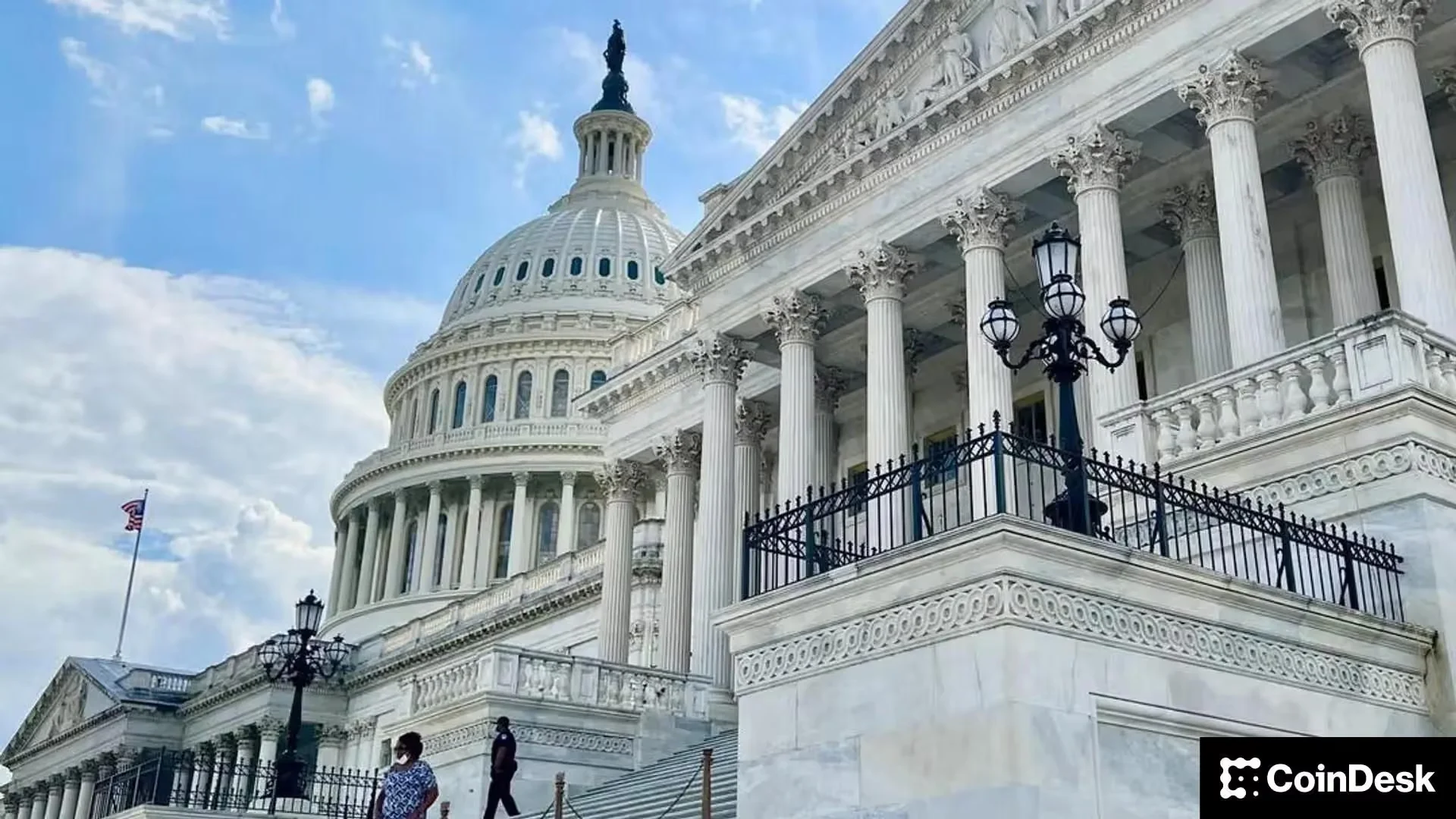
TechFlow Digest: On August 19, the White House will convene a meeting with crypto giants such as Coinbase, Ripple, a16z, and traditional finance executives from Nasdaq, CME, etc. Trump himself, SEC Chairman Atkins, and CFTC Chairman Selig are expected to attend. The summit comes on the eve of the CLARITY Act’s Senate procedural vote requiring 60 votes on September 15. Industry commentator Nate Geraci judges: The White House does not intend to wait for Congress anymore.
On August 14, Semafor reporter Eleanor Mueller broke the news on X: The White House is preparing a crypto industry summit, scheduled for August 19 (Wednesday), citing “people familiar with the plan.” Politico followed up on the same day, citing three anonymous
ETF industry commentator Nate Geraci subsequently posted a more complete list of invitees on X: Trump himself, SEC Chairman Atkins, CFTC Chairman Selig, as well as crypto industry executives from Coinbase, Polymarket, Ripple, Gemini, etc. Traditional finance giants are also on the invite list. Geraci is the President of The ETF Store and has long commented on ETFs and crypto assets on mainstream financial media.
He said at the end of the tweet: “The government does not intend to wait for the CLARITY Act anymore. Gaining support is certainly good, but I think they have already decided to push forward regardless. I predict this meeting will strongly convey this signal.”
Who Was Invited to the White House
Crypto and prediction market side: Coinbase, Ripple, a16z (Andreessen Horowitz), Chainlink, Paradigm, Kalshi. Representatives from the industry organization Digital Chamber are also on the invite list. Blockonomi’s report also added Gemini, Robinhood, and Polymarket.
Traditional finance side: Nasdaq, CME Group, Intercontinental Exchange (ICE), DTCC. Executives from these companies also hold positions on the CFTC’s newly established Innovations Advisory Committee (IAC).
Government side: Trump himself is expected to attend, SEC Chairman Paul Atkins and CFTC Chairman Michael Selig confirmed participation. Treasury Secretary Scott Bessent and Commerce Secretary Howard Lutnick may attend, but are not finally confirmed.
The meeting location is the Eisenhower Executive Office Building, adjacent to the White House main building. Neither the White House nor the two regulatory agencies have released a formal agenda.
Compared to the summit in March 2025, the list adds Kalshi and Polymarket, and lacks MicroStrategy’s Michael Saylor. The main cast has changed.
The CLARITY Act and Trump’s Crypto Wallet
The CLARITY Act (Digital Asset Market Clarity Act, H.R. 3633) aims to solve a problem that has dragged on for over a decade: clarifying the regulatory boundaries between the SEC and CFTC regarding digital assets. Which tokens are securities under SEC jurisdiction, and which are commodities under CFTC jurisdiction. Blurred boundaries have led to frequent delisting of tokens by US crypto exchanges, products unable to launch in the US, and companies moving headquarters overseas.
In July 2025, the House of Representatives passed it 294 to 134, with 78 Democrats voting in favor. In May 2026, the Senate Banking Committee advanced it 15 to 9. At the full Senate vote stage, it got stuck.
Senate Majority Leader John Thune submitted a cloture motion before the recess on August 8. Procedural voting enters at 2:15 PM on September 15, with a threshold of 60 votes. Republicans hold 53 seats; even with unanimous approval, they are still 7 votes short.
Market structure provisions are basically finalized; what is truly stuck are several political issues.
Trump’s crypto assets are the most acute. Senators Thom Tillis (Republican) and Ruben Gallego (Democrat) drafted a bipartisan ethics proposal requiring Trump to divest from crypto businesses and allowing state attorneys general to enforce restrictions on officials issuing digital assets. Trump has not yet approved. The bill’s main negotiator, Republican Senator Cynthia Lummis, called granting enforcement power to state attorneys general a Republican “red line.”
Stablecoin yield provisions are also controversial. Banking groups oppose allowing stablecoins to offer interest-like yields, believing this blurs the line between payment tokens and deposit-like products.
DeFi provisions are also undecided. Section 604 was intended to protect non-custodial developers from money transmission regulations, but disagreements surrounding sanctions compliance and anti-money laundering remain.
Lummis explained in July why Republicans are not advancing with their own 53 votes: “Only a bill built by both parties can survive in future elections.” She revealed that the bill ballooned from 68 pages in the 2022 Lummis-Gillibrand proposal to 616 pages after nearly 11 months of bipartisan negotiations.
Prediction market pricing is not optimistic. Polymarket contracts show the probability of the CLARITY Act becoming law in 2026 is about 19%, sliding all the way from a peak of 82% in February. Galaxy Research gives 10%, citing unresolved policy disagreements and limited Senate working days before the midterm elections. Kalshi contracts show the probability of the Senate voting before October 1 is 88%, but voting does not equal passing.
Prediction Markets Sit at the Table for the First Time
Kalshi and Polymarket being invited to the White House is a first at the White House level.
Kalshi is a CFTC-regulated event contract platform, and Polymarket is a decentralized prediction market. Both companies have expanded rapidly over the past two years, but their legal status has been caught between the CFTC’s derivatives regulatory authority and state gambling laws.
The White House inviting them is equivalent to putting prediction markets on the formal policy agenda.
On August 20, the second day of the White House summit, the CFTC’s newly established Innovations Advisory Committee (IAC) will hold its first meeting in Washington. CFTC website and Federal Register announcements show the meeting runs from 1 PM to 4 PM, divided into three 50-minute panel discussions: crypto asset regulation, application of AI in trading compliance, and prediction markets versus federal/state jurisdiction. On August 11, the CFTC also exercised emergency powers to make market stability measures regarding a notice from Kalshi.
The White House sets the tone, the CFTC discusses implementation. Scheduled back-to-back, these two days put crypto, AI, and prediction markets into the same policy framework.
The White House Is Not Waiting
The SEC and CFTC do not need to wait for Congressional legislation to act. Both agencies can advance rulemaking under the existing legal framework.
Coinbase CEO Brian Armstrong said on August 7: “The momentum of this technology is growing regardless of the Congressional calendar.” He named stablecoin usage, tokenized assets, and perpetual futures as areas where activity can continue during legislative stagnation.
Galaxy Head of Research Alex Thorn gave a more specific prediction on August 14: “Regardless of the outcome of the CLARITY Act, we expect the Commission to release the text of Reg Crypto and Innovation Exemption within the next few weeks, which is another reminder that the crypto industry is about to enter a positive regulatory environment.”
The SEC originally scheduled a public meeting on August 14 to discuss a proposed framework for certain crypto-related investment contracts, but canceled it before the meeting. No reason for cancellation was given, nor was a new date announced. The cancellation occurred on the same day news of the White House summit broke.
Even if the CLARITY Act fails to reach 60 votes on September 15, the White House can still push forward on its own: the SEC continues to formulate crypto asset rules, the CFTC collects industry recommendations through the Innovations Advisory Committee and converts them into regulatory proposals, and the White House maintains policy direction through executive orders and agency guidance documents.
The White House will not stop because Congress is stuck. This is the core signal Geraci judges the summit intends to convey.
The Summit Last March, and What’s Different This Time
On March 7, 2025, Trump hosted the first crypto summit in the White House State Dining Room, the first president-level crypto industry roundtable in US history.
The theme of that summit was “End the War on Crypto.” Trump announced the establishment of a Strategic Bitcoin Reserve, with an initial scale of about 200,000 BTC (all from law enforcement seizures), promising not to sell Bitcoin held by the government anymore. He announced the termination of “Operation Chokepoint 2.0” (the practice of regulators pressuring banks to cut off crypto company accounts), requiring Congress to pass stablecoin legislation before the August recess.
Attendees included Coinbase’s Brian Armstrong, MicroStrategy’s Michael Saylor, Gemini’s Winklevoss twins, Chainlink’s Sergey Nazarov, Robinhood’s Vlad Tenev, and Zach Witkoff, co-founder of Trump’s own crypto company World Liberty Financial.
The market reaction was “buy the rumor, sell the news.” Bitcoin fell 3.4% that day, closing at $86,394. Investors originally expected the government to announce a plan to directly purchase new Bitcoin, but only saw a “budget-neutral” strategy.
This time there is no news of a strategic reserve, no “end the war” narrative needs to be reiterated. The topic has shifted from “whether to support crypto” to “specifically how to regulate.” The list adds Nasdaq and CME, adds Kalshi and Polymarket, adds the policy dimension of prediction markets.
Trump’s own crypto conflicts of interest also remain.
The TRUMP token and World Liberty Financial project sparked controversy last March. An important reason the CLARITY Act is stuck in the Senate is Democrats demanding Trump divest from crypto businesses. The ethics proposal from Tillis and Gallego is still awaiting a White House response. The White House has not publicly stated whether the summit agenda includes discussion of ethics provisions.
Bitcoin had almost no reaction after news of the summit broke. On August 14, BTC was around $63,406, falling 0.2% intraday. <a href="https://cryptoz7.com/vitalik-buterin-ethereum-scaling-strategy-advances/” title=”Vitalik Buterin: Ethereum Scaling Strategy Advances”>Ethereum was about $1,886. CoinMarketCap Fear and Greed Index reading was 37, in the “Fear” zone.
Join TechFlow official community to stay tuned
Telegram:https://t.me/TechFlowDaily
X (Twitter):https://x.com/TechFlowPost
X (Twitter) EN:https://x.com/BlockFlow_News
Add to Favorites
Share to Social Media
Author深潮 TechFlow深潮TechFlow
