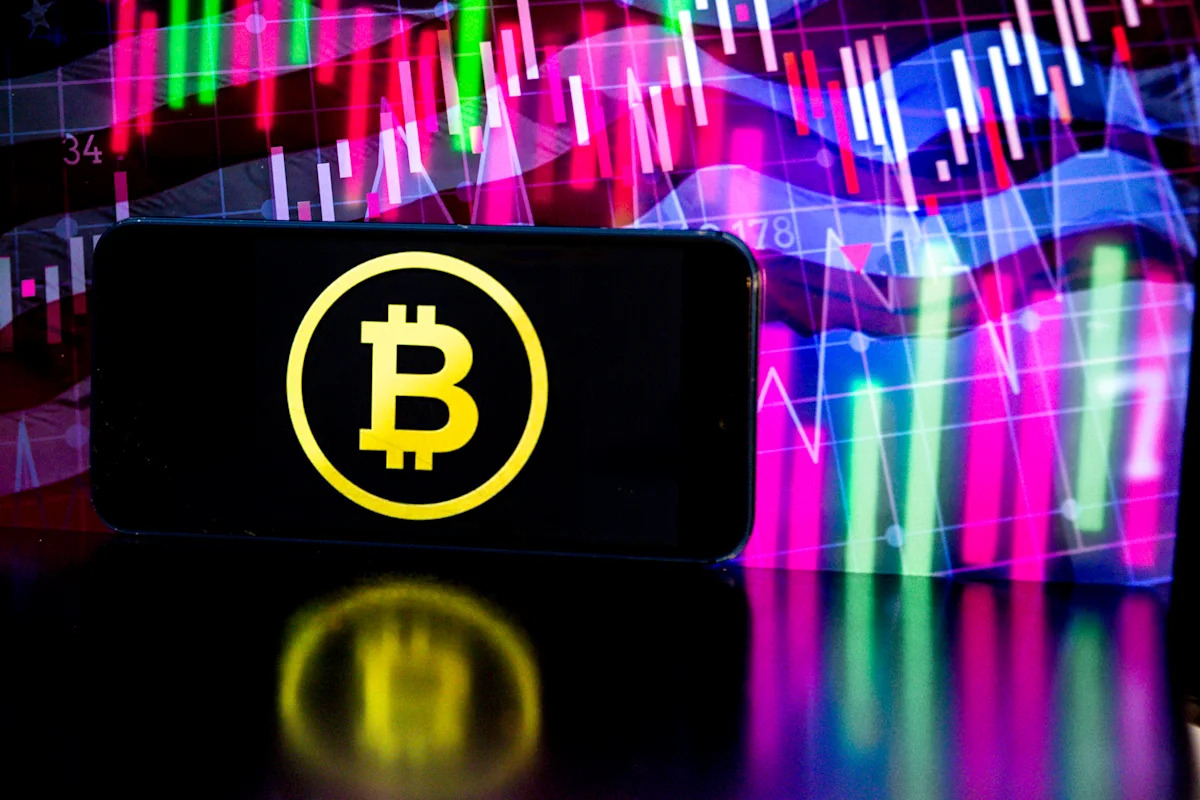

Bitcoin‘s price volatility has been on full display in recent months, rebounding sharply from a stretch of sharp price swings. However, many investors see price slumps as a buying opportunity — not an exit sign.
If you want to purchase bitcoin, there’s good news. It’s no longer a chaotic financial frontier experiment — it’s fast, regulated, and integrated into institutional finance.
New to bitcoin? Here’s everything you need to know.
How to buy bitcoin in 2026
There are several ways to buy bitcoin. You can go through a crypto exchange, a fintech app, or a traditional brokerage that will allow you to buy into a bitcoin ETF.
Before placing a trade, though, decide what you actually want: full ownership of your bitcoin and private keys — or easy price exposure inside a familiar, regulated system.
Whichever avenue you take, it’s important to remember that bitcoin remains a high-risk, highly volatile asset compared to many other investments. Prices can surge or drop quickly, sometimes without warning. If you’re considering buying bitcoin, assume volatility is part of the deal.
Step 1: Choose where to buy bitcoin
Where you purchase your bitcoin determines your costs, your level of control, and how smoothly you can move, store, and manage your assets.
Centralized crypto exchanges
Centralized exchanges are platforms designed specifically for digital assets. They offer the widest range of features, including the ability to withdraw your bitcoin to your own private wallet, which dedicated crypto traders consider key.
There are dozens of crypto exchanges, and most offer simple interfaces designed for new investors, as well as advanced tools for more experienced traders. You should choose one with a strong track record of protecting customer funds, along with solid regulation and reliable customer support.
Coinbase remains the largest crypto exchange in the U.S., with an interface designed to be as intuitive as a banking app. It offers built-in educational re
Kraken and Gemini are two other major exchanges. All three are based in the U.S. and offer a wide selection of cryptocurrencies (Coinbase alone offers more than 375 coins).
Trading apps and payment apps
If you already have Robinhood, PayPal, or Cash App, you can buy bitcoin through the app. Convenience is the big win here. There’s no new password to create, and in most cases, no need to wait for a bank transfer to clear because your account is already funded.
Popular financial apps that offer bitcoin include:
Robinhood has become a heavyweight in crypto by offering “zero-commission” trading. However, don’t be fooled — zero-commission isn’t truly free. Robinhood and its competitor Webull make money through a gap between the market price and what you pay, which is known as the spread.
As of July 24, 2025, Robinhood earns about $0.85 for every $100 in crypto trades routed to its market maker — roughly 0.85% of the trade amount. That built-in cost will be reflected in the price you pay when buying or selling bitcoin.
With PayPal and Venmo, you’ll pay a 2.2% fee for trades involving less than $75 worth of bitcoin, with the fee dropping as the order size increases. You may pay additional fees to cash out or transfer your assets to an external wallet.
With Cash App, you’ll pay a flat fee of $0.49 to $1.49 for orders up to $100, then the fee structure switches to between 1% and 2% for orders totaling $100 to $5,000.
A drawback of fintech apps used to be limited control over moving your bitcoin to a private wallet without cashing out first. However, in 2026, several platforms — including Cash App, Robinhood, and Public — now allow bitcoin transfers to external wallets.
Bitcoin ETFs
If you have an IRA or a standard brokerage account, you can now buy “shares” of bitcoin just like you buy shares of Apple or an S&P 500 index fund.
In January 2024, the Securities and Exchange Commission gave bitcoin ETFs the green light, and since then, investors have poured billions into the funds: Roughly $110 billion flowed into a dozen different bitcoin ETFs during the first year alone, according to the Wall Street Journal.
Bitcoin ETFs allow retail investors who are new to crypto to gain exposure without a dedicated wallet, private keys, or a centralized exchange. They let you trade bitcoin like a stock through your existing brokerage. You buy shares in a fund — managed by firms such as BlackRock and Fidelity — that holds the actual bitcoin for you. The ETF’s price tracks the coin’s price movements directly, offering the simplest, most hands-off way to buy bitcoin.
Holding bitcoin ETFs inside a traditional or Roth IRA also comes with powerful tax advantages: tax-deferred or even tax-free growth. You’ll also avoid capital gains tax and the hassle of managing wallets or private keys.
The catch? You’ll pay an annual fee to the company managing the ETF, known as an expense ratio (typically around 0.25% to 0.40%). If you invest in bitcoin through an ETF, you don’t actually own bitcoin — you own shares in a fund that does.
Step 2: Create your account and verify your identity
After picking your platform, you’ll go through the account setup process. It’s designed to be relatively painless and should take just a few minutes.
If you’re opening a new account to buy your bitcoin, you’ll need to confirm your identity with information including your name, address, and Social Security number. If you’re buying bitcoin through an app in which you already have an account, you can go straight to investing.
The Know Your Customer process
KYC is the identity check financial platforms use to verify who you are and comply with anti-fraud and anti-money laundering laws. Most will ask for a photo of a government ID (driver’s license or passport) and a quick selfie. Modern verification systems match your face to the ID in real time.
Thanks to automated verification, most people are approved and ready to buy within minutes.
While no-KYC platforms still exist, they offer fewer protections — so they’re best for beginners to avoid.
Step 3: Fund your account
Now that your account is live, you need to move some traditional currency — like U.S. dollars — onto the platform. You have several ways to do this.
ACH bank transfer: Generally, this is the most common option. It’s usually free, but funds can take three to five business days to fully clear. Many platforms let you buy right away, though you may not be able to withdraw until the transfer settles.
Debit card or credit card: This is the fastest option — your purchase happens instantly. The downside is higher fees (often 3% or more).
Wire transfer: This is best for large deposits, typically clears within 24 hours, and allows higher limits.
PayPal or Apple Pay: Convenient and quick, this method is usually more expensive than a standard bank transfer.
Learn more:Can you buy crypto with a credit card?
Step 4: Buy your bitcoin
Once your account is funded, you’re ready to buy your first bitcoin. Most platforms give you two main order options.
A market order is a “buy now” option. You choose how much to spend, and the platform instantly buys bitcoin at the current price.
A limit order is another approach that lets you set the exact price you’re willing to pay. If bitcoin is $65,000 and you only want to buy at $62,000, your order will not be executed until the price drops to that level.
For beginners with long-term investing in mind, the tried-and-true strategy of dollar-cost averaging works just as well for bitcoin as it does for other investments. Many apps let you automate recurring buys — for example, $50 every week on Tuesdays. This removes the stress of timing the market and helps smooth out your average purchase price over time.
Step 5: Keep your bitcoin safe
Buying bitcoin is one thing, but keeping it safe is perhaps the most important step of all.
There’s an axiom among crypto purists: “Not your keys, not your coins.” This refers to the idea that if you keep your bitcoin on an exchange, the exchange technically controls the private keys — the digital password — to your money.
If the exchange freezes withdrawals, gets hacked, mismanages funds, or collapses (like FTX did in 2022), your bitcoin can become inaccessible or disappear.
Software vs. hardware wallets
If you plan to hold a sizable amount of bitcoin, consider moving your holdings to a private wallet.
A software wallet (hot wallet) is a phone app or browser extension, like Coinbase Wallet or Exodus. It’s convenient and free, but because it’s connected to the internet, it’s still technically vulnerable to hacking.
A hardware wallet (cold wallet) is a physical device, like a Ledger or a Trezor, that looks like a USB stick. You must physically confirm transactions on the device, making it the gold standard for security.
Best practices for custody
If you use a private wallet, your top priority is creating and protecting a seed phrase — the 12 to 24 words that act as the master key to your bitcoin wallet. It’s the only way to recover your funds if your device is lost, stolen, or damaged. Lose the phrase, and you permanently lose access to your bitcoin.
Never store your seed phrase digitally or share it with anyone. Keep it offline, back it up in a durable format, and store it in a physically secure location, like a safe.
Self-custody is seen as the gold standard in crypto, but it only works if you can reliably secure your keys offline. When you hold your own keys, you become the bank, the security team, and customer support all in one.
If you don’t want that much responsibility, using a reputable fintech app or exchange and accepting the trade-offs may be the more practical option.
Beware of fees, taxes, and hidden costs
People buy bitcoin because they believe the price will increase in the future. But if you’re not careful, fees and taxes can chip away at your returns.
Platforms make money through direct fees and what’s known as the spread.
A direct fee might be a flat charge or a percentage per trade. Meanwhile, the spread is more subtle: If bitcoin’s market price is $64,000, you might actually pay $64,200 to buy and get $63,800 if you sell. The gap between those prices is profit for the platform.
Compared to stocks, crypto is usually more expensive to trade. Most major brokers now offer $0 commission stock trades with tight spreads for basic investors. Crypto platforms, on the other hand, still make a meaningful chunk of revenue from trading activity, spreads, and routing.
One way to lower fees on crypto trades is to avoid simple buy/sell buttons on exchanges, which often sneak in higher spreads and convenience fees. Switching to advanced trading screens on platforms like Coinbase can often cut costs with no premium subscription required.
Paying taxes on bitcoin
The IRS has been clear for several years: Cryptocurrency is taxable.
You will typically owe taxes on your bitcoin investing when you sell crypto for more than you paid for it or when you trade one crypto for another. Taxes aren’t taken out at the time of the transaction — you report them on your tax return for the year the sale happened.
Starting Jan. 1, 2026, brokers must issue Form 1099-DA to report crypto sales from the 2025 tax year. For now, the form shows proceeds but not your cost basis, meaning you still have to track your purchase price yourself.
Starting with 2026 transactions (reported in 2027), brokers will begin reporting cost basis for eligible assets held on their platform. And most major platforms now offer tax centers where you can download a report that plugs directly into software programs like TurboTax or H&R Block.
How to buy bitcoin FAQs
Do you need a crypto wallet before buying bitcoin?
No. You can buy bitcoin directly on crypto exchanges, and they’ll hold it for you in a built-in custodial wallet. That’s the easiest path for beginners. You only need a separate private wallet if you want full control over your keys and security.
How much money do you need to start buying bitcoin?
Not much. You don’t need to buy a whole bitcoin — you can purchase a tiny fraction for just a few dollars on most platforms.
Can you cash out bitcoin without paying taxes?
Generally, no. Selling bitcoin, converting it to another crypto, or using it to buy goods or services typically triggers a taxable event. If you sell your bitcoin for more than you bought it for, you may owe capital gains tax.
*Cryptocurrency trading is offered through Robinhood Crypto, LLC (NMLS ID 1702840). Trading and holding digital assets involves significant risk, including the risk of substantial loss. Cryptocurrency held through Robinhood Crypto is not FDIC insured or SIPC protected. Trading and owning digital assets involves significant risk, including the risk of substantial loss. Cryptocurrency trading is offered through an account with Robinhood Crypto, LLC (NMLS ID 1702840). Robinhood Crypto is licensed to engage in virtual currency business activity by the New York State Department of Financial Services. Cryptocurrency held through Robinhood Crypto is not FDIC insured or SIPC protected. * Network fees may apply. Availability may be subject to regulatory approval in certain states.
Content may include affiliate links. The publisher may receive compensation if you open an account through those links.
<img src="https://cryptoz7.com/wp-content/uploads/2026/08/https-2F-2Fs.yimg_.com-2Fos-2Fcreatr-uploaded-images-2F2025-08-2Fa0196450-7854-11f0-afdb-9544ae1635be-2.jpg" alt="How to buy ethereum — and what to know before you do”>
How to buy ethereum — and what to know before you do
Ethereum is becoming a staple in modern digital portfolios. Learn how to choose your investment strategy, pick the right platform, execute the trade, and more.
How to invest in cryptocurrency: A beginner’s guide
Before you place your first trade, it’s important to understand what cryptocurrency is and how it works. Learn how to invest in crypto in 3 steps.

What is bitcoin, and how does it work?
From how to buy bitcoin to how it works — find out what you should know about bitcoin as a cryptocurrency.

How to trade crypto: A step-by-step guide
New to crypto? This step-by-step guide breaks down how to trade, where to buy, and how to protect your digital assets.

How to buy solana: A step-by-step guide
Investing in solana is easier than ever. Here’s everything you need to know about how to buy solana in 2026.

How to start buying crypto with $100
Curious about crypto but not ready to risk big money? Learn how to start investing with just $100.
